Cash Loan and Pawning Monitoring System: Building a Secure and Efficient Online Lending Platform
Table of Contents
- Cash Loan and Pawning Monitoring System: Building a Secure and Efficient Online Lending Platform
- Understanding the Business Context
- Cash Loan Services
- Pawning Services
- Core Objectives of the System
- System Architecture Overview
- Frontend Design: User-Centered Interface
- Backend Processing: Business Logic Automation
- Database Design and Structure
- Loan Monitoring Features
- Automated Interest Calculation
- Due Date Alerts
- Payment Tracking
- Pawning Monitoring Features
- Item Registration
- Redemption Tracking
- Inventory Management
- Role-Based Access Control (RBAC)
- Security and Data Protection
- Password Protection and Encryption
- Input Validation and Attack Prevention
- Audit Logging
- Reporting and Analytics
- Benefits to Lending Businesses
- Challenges in Development
- Financial Computation Accuracy
- Data Migration
- User Training
- Scalability
- Integration Possibilities
- Academic and IT Project Relevance
- Conclusion
In many communities, especially in developing and semi-urban areas, cash lending and pawning services play an important role in financial accessibility. Small business owners, employees, and individuals often rely on short-term loans or pawn services to address urgent needs. However, despite the importance of these services, many pawnshops and lending offices still operate using manual record-keeping systems—paper logs, notebooks, spreadsheets, or isolated desktop applications.
Manual systems bring a number of operational risks:
- Misplaced or damaged records
- Calculation errors in interest or penalties
- Difficulty tracking due dates
- Lack of transparency in transactions
- Limited reporting capabilities
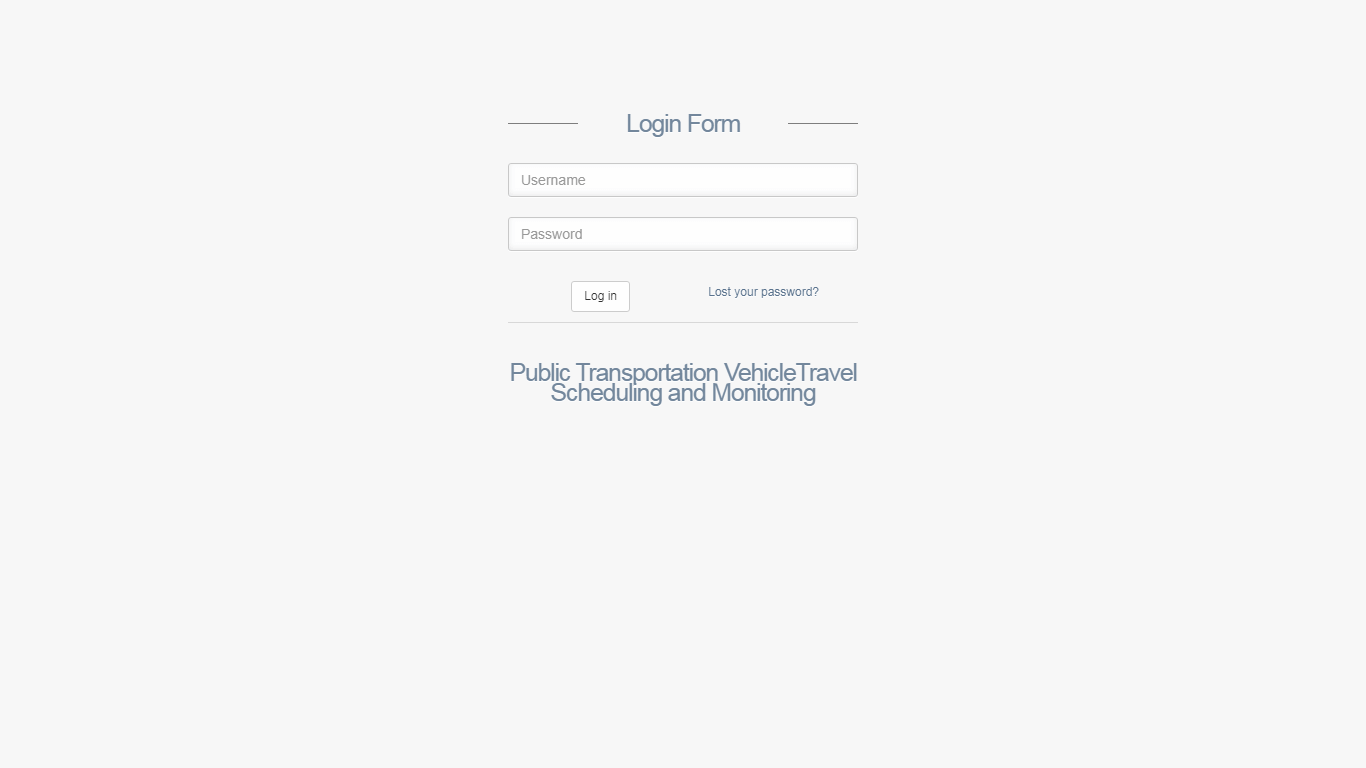
The Cash Loan and Pawning Monitoring System is a web-based platform designed to modernize and secure lending operations. It centralizes records, automates computations, monitors payments, and generates reports in real time. More than just digitizing paperwork, it provides structured, secure, and scalable management for financial transactions.
From an IT perspective, this system integrates database architecture, role-based access control, financial computation logic, and secure web development into a comprehensive business solution.

Understanding the Business Context
Before designing the system, it is important to understand how traditional cash loan and pawning operations work.
Cash Loan Services
A cash loan transaction typically includes:
- Borrower information
- Loan principal amount
- Interest rate
- Loan term or due date
- Payment schedule
- Penalties for late payment
Tracking these details manually can lead to inconsistencies and errors.
Pawning Services
In pawning, a client provides a valuable item (e.g., jewelry, gadgets) as collateral in exchange for cash. The process involves:
- Item description and appraisal
- Loan value
- Interest computation
- Redemption deadline
- Storage and monitoring of pawned items
Monitoring pawned items and ensuring accurate computation over time requires organized record management.
A digital system eliminates ambiguity and strengthens operational control.
Core Objectives of the System
The Cash Loan and Pawning Monitoring System aims to:
- Digitize loan and pawn transaction records.
- Automate interest and penalty calculations.
- Monitor due dates and payment status.
- Secure financial data through role-based access control.
- Generate financial and operational reports.
- Improve transparency and accountability.
These objectives align with financial management best practices and modern IT governance standards.
System Architecture Overview
The system follows a layered web application architecture:
- Frontend Interface (User Dashboard)
- Backend Processing Layer
- Database Management Layer
- Security and Access Control Layer
Each layer must be designed to ensure accuracy, reliability, and protection of sensitive financial data.
Frontend Design: User-Centered Interface
The user interface should be clean and structured. Lending staff must quickly access records without navigating complex menus.
Frontend technologies may include:
- HTML5 for page structure
- CSS3 or Bootstrap for responsive design
- JavaScript for dynamic forms and validation
- AJAX for real-time updates
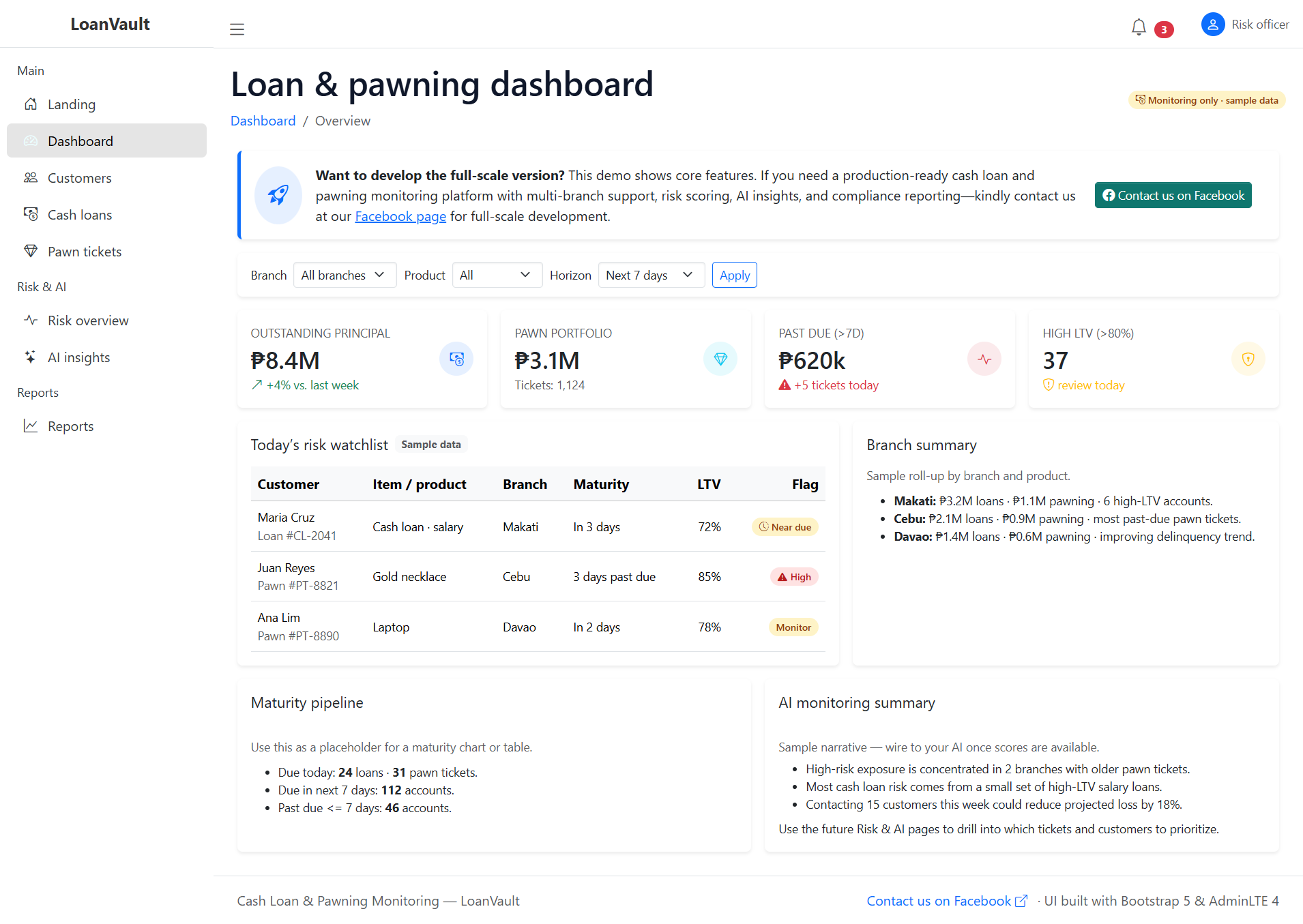
The dashboard may include:
- Active loans summary
- Pawned items list
- Upcoming due dates
- Total outstanding balance
- Daily transaction overview
The system should be mobile-responsive, especially for small offices that rely on tablets or laptops.
Backend Processing: Business Logic Automation
The backend handles the core financial logic. Technologies commonly used include:
- PHP (native or MVC framework)
- Node.js
- MySQL or PostgreSQL database
- RESTful API structure
Key backend functions include:
- Interest computation
- Penalty calculation for late payments
- Due date monitoring
- Payment recording
- Account status updates
- Report generation
All calculations must follow configurable rules to accommodate different business models.
Database Design and Structure
A well-structured database ensures efficient transaction management.
Key tables may include:
- Users
- Borrowers
- Loans
- PawnItems
- Payments
- InterestRates
- AuditLogs
Each loan or pawn record must have a unique identifier for traceability.
Relationships between tables should be normalized to prevent redundancy and ensure data integrity.
For example:
- A borrower may have multiple loans.
- A loan may have multiple payment entries.
- A pawn item is linked to a specific transaction.
Indexes should be applied to frequently searched fields such as borrower name, due date, and transaction status.
Loan Monitoring Features
The system must provide comprehensive loan tracking.
Automated Interest Calculation
Interest may be computed based on:
- Fixed rate
- Declining balance
- Daily rate
- Monthly rate
The system should automatically calculate total payable amounts and update balances upon payment.
Due Date Alerts
The system can generate notifications for:
- Upcoming due dates
- Overdue accounts
- Expired pawn redemption periods
Notifications may appear within the dashboard or be sent via SMS or email integration.
Payment Tracking
Each payment entry must record:
- Amount paid
- Date of payment
- Remaining balance
- Payment method
- Processed by (staff member)
Automatic balance updates reduce manual errors.
Pawning Monitoring Features
Pawn operations require item-specific tracking.
Item Registration
When an item is pawned, the system records:
- Item description
- Serial number (if applicable)
- Appraised value
- Loan amount
- Storage location
- Condition notes
Optional image uploads help prevent disputes.
Redemption Tracking
The system monitors:
- Redemption deadline
- Interest accumulation
- Extension requests
- Forfeiture status
If an item is not redeemed within the allowed period, the system can mark it as eligible for resale.
Inventory Management
Pawned items must be stored securely. The system may include:
- Storage location mapping
- Item status updates
- Inventory reports
This helps prevent misplacement or mismanagement.
Role-Based Access Control (RBAC)
Since financial data is sensitive, not all users should have equal access.
Possible user roles include:
- Administrator
- Manager
- Loan Officer
- Cashier
- Auditor
Each role has defined permissions.
For example:
- Only administrators can modify interest rates.
- Loan officers can create new transactions.
- Auditors can view reports but cannot edit records.
RBAC ensures operational security and accountability.
Security and Data Protection
Financial systems require strong security implementation.
Password Protection and Encryption
- Passwords must be hashed using secure algorithms.
- HTTPS must be enforced for encrypted communication.
- Sensitive financial data may be encrypted at rest.
Input Validation and Attack Prevention
The system must prevent:
- SQL injection
- Cross-site scripting (XSS)
- Cross-site request forgery (CSRF)
Proper validation protects system integrity.
Audit Logging
Every action should be logged, including:
- Record creation
- Record modification
- Payment updates
- User login activity
Audit logs provide traceability and help detect fraudulent activity.
Reporting and Analytics
A major advantage of digitization is reporting capability.
The system can generate:
- Daily transaction reports
- Outstanding loan summaries
- Interest income reports
- Pawn inventory reports
- Monthly revenue analysis
Data visualization tools can present:
- Bar charts for revenue
- Line graphs for loan trends
- Pie charts for transaction types
These insights support better business decisions.
Benefits to Lending Businesses
Implementing a web-based monitoring system offers several advantages:
- Reduced manual errors
- Faster transaction processing
- Improved customer service
- Enhanced transparency
- Secure data storage
- Accurate financial reporting
- Easier regulatory compliance
In the long term, automation improves operational efficiency and profitability.
Challenges in Development
Despite its benefits, system development requires careful planning.
Financial Computation Accuracy
Interest and penalty calculations must be precise. Small errors can accumulate over time.
Thorough testing is essential.
Data Migration
If transitioning from paper records, manual data entry or migration strategies must be implemented.
User Training
Staff must be trained to use the system properly. Adoption depends on ease of use and proper orientation.
Scalability
As the business grows, the system must support:
- Increased transaction volume
- Multiple branches
- Expanded user roles
Cloud hosting can help manage scalability.
Integration Possibilities
The system can be enhanced through:
- SMS notification gateways
- Online payment integration
- Credit scoring modules
- Multi-branch synchronization
- Mobile application version
- Biometric login for added security
Future upgrades can transform the system into a comprehensive fintech platform.
Academic and IT Project Relevance
From an IT standpoint, this project integrates:
- Web application development
- Financial computation algorithms
- Database management
- Security engineering
- User authentication systems
- Reporting and analytics modules
It serves as a strong capstone project because it addresses a real business need while demonstrating practical software engineering skills.
Conclusion
The Cash Loan and Pawning Monitoring System represents a practical modernization of traditional lending operations. By digitizing records, automating financial computations, and implementing secure access controls, the system enhances transparency, efficiency, and accountability.
From a development perspective, it showcases the integration of structured database design, backend business logic, frontend usability, and cybersecurity practices. From a business perspective, it provides a scalable and reliable solution for managing financial transactions.
In an increasingly digital economy, even small lending institutions must embrace secure online systems. A well-designed monitoring platform does more than store records—it strengthens operational integrity and builds long-term trust with clients.
Ultimately, this system reflects how IT solutions can transform traditional financial services into organized, data-driven, and secure digital operations.
You may visit our Facebook page for more information, inquiries, and comments. Please subscribe also to our YouTube Channel to receive free capstone projects resources and computer programming tutorials.
Hire our team to do the project.