Voice-Based Interactive Storytelling App: Building an Immersive Online Platform Through Speech Technology
Table of Contents
- Voice-Based Interactive Storytelling App: Building an Immersive Online Platform Through Speech Technology
- The Concept: Stories That Listen Back
- Why Voice-Based Interaction?
- Advantages of Voice-Based Systems
- System Overview: An Online Platform Architecture
- Core Objectives
- Key Features of the Platform
- 1. Voice Recognition Engine
- 2. Dynamic Story Branching
- 3. AI-Driven Personalization
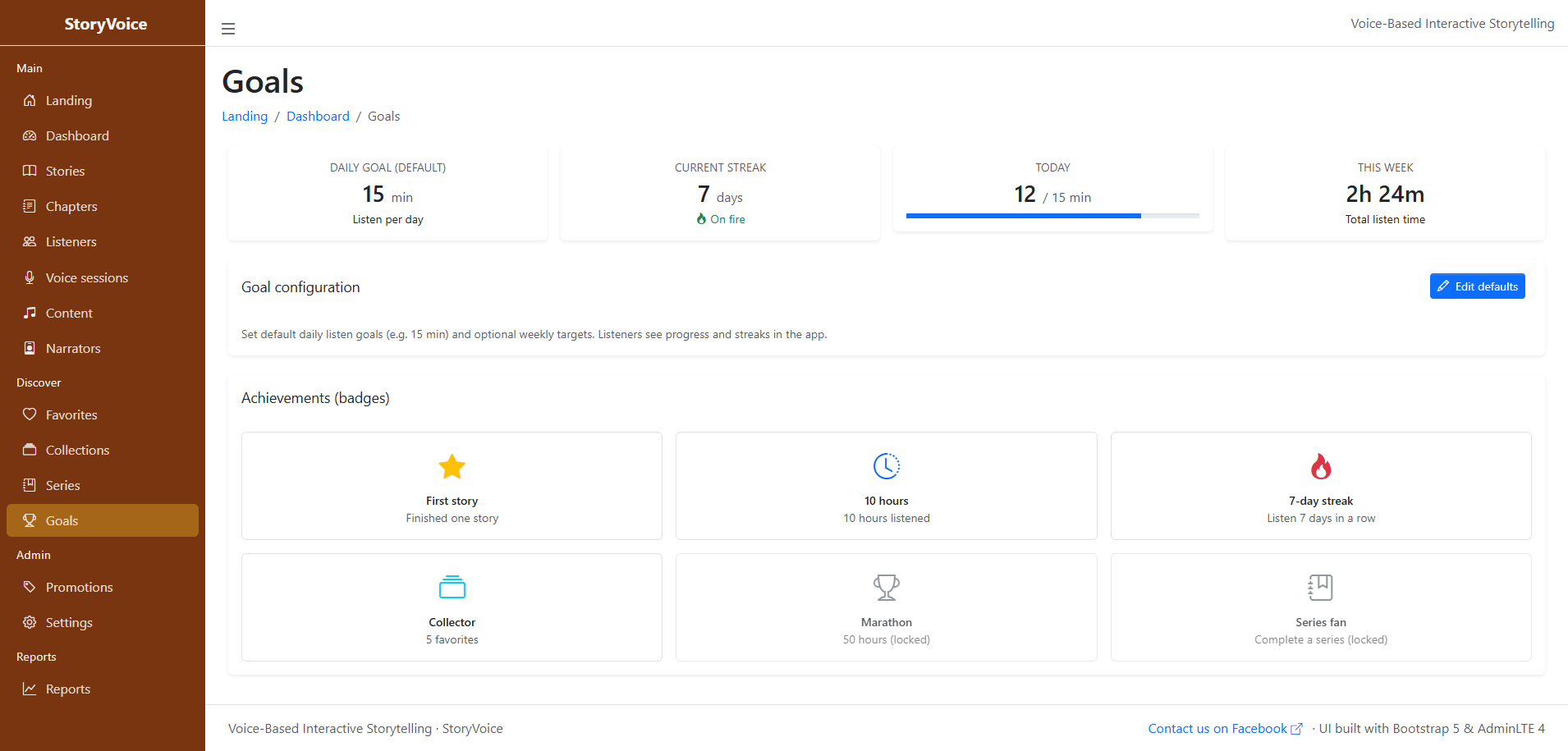
- 4. User Profiles and Progress Tracking
- 5. Gamification Elements
- Technology Stack for Development
- Frontend Technologies
- Backend Technologies
- AI and NLP Integration
- Database Design
- Educational Applications
- 1. Language Learning
- 2. Reading Comprehension
- 3. Creative Writing Training
- User Experience Considerations
- Clear Voice Prompts
- Latency Management
- Accessibility and Inclusivity
- Challenges in Development
- 1. Speech Recognition Accuracy
- 2. Natural Language Understanding
- 3. Story Complexity Management
- 4. Data Privacy
- Potential Future Enhancements
- Social and Industry Impact
- Conclusion
Storytelling has always been one of humanity’s most powerful tools. Long before screens and smartphones, stories were shared through voice—around fires, in classrooms, and at bedtime. Today, technology allows us to reimagine storytelling in ways that are not only interactive but also intelligent.
The Voice-Based Interactive Storytelling App is an IT-driven online platform that combines speech recognition, artificial intelligence, and web development to create immersive story experiences. Instead of passively reading or watching a story, users speak, respond, and influence how the narrative unfolds.
This project represents a convergence of modern software engineering, human-computer interaction, and creative media. It is not just about building a website; it is about designing an interactive environment where voice becomes the primary interface.

The Concept: Stories That Listen Back
Traditional digital storytelling—such as eBooks or animated videos—follows a linear format. The user scrolls, clicks, or watches. Interaction is limited.
A voice-based storytelling platform changes that dynamic.
Here’s how it works conceptually:
- The system narrates a story.
- At key points, it pauses and asks the user a question.
- The user responds verbally.
- The app processes the speech input.
- The story branches based on the response.
In short, the story listens and adapts.
This approach creates a participatory experience, making the user feel like a character within the narrative rather than an external observer.
Why Voice-Based Interaction?
Voice is one of the most natural forms of human communication. With advancements in speech recognition and natural language processing (NLP), voice interfaces have become more accurate and accessible.
Advantages of Voice-Based Systems
- Hands-free interaction
Users can interact without typing or clicking. - Improved accessibility
Beneficial for children, elderly users, and individuals with physical limitations. - Enhanced engagement
Speaking responses makes the experience feel personal and immersive. - Language development support
Especially useful for early learners practicing pronunciation and comprehension.
In an educational or entertainment setting, voice interaction significantly increases emotional engagement.
System Overview: An Online Platform Architecture
The Voice-Based Interactive Storytelling App is designed as a web-based platform accessible through modern browsers. It can also function as a Progressive Web App (PWA) for mobile-like experiences.
Core Objectives
The system aims to:
- Create immersive, interactive storytelling experiences
- Utilize speech recognition for real-time input
- Personalize narratives based on user responses
- Provide analytics and progress tracking
- Support educational and entertainment use cases
Key Features of the Platform
1. Voice Recognition Engine
At the heart of the application is a speech-to-text module. When a user responds verbally, the system:
- Captures audio input via the device microphone
- Converts speech into text
- Processes the response using NLP algorithms
- Determines the appropriate narrative branch
This component requires careful calibration to handle:
- Different accents
- Background noise
- Varying speech speeds
Accuracy directly impacts user satisfaction.
2. Dynamic Story Branching
Stories are not static. They are structured like decision trees.
Each story contains:
- A beginning
- Multiple branching points
- Alternative outcomes
- Possible endings based on user choices
For example:
- The narrator asks: “Do you enter the forest or follow the river?”
- The user says: “Enter the forest.”
- The system routes to the forest storyline.
This branching logic is stored in a structured database, allowing flexible story development.
3. AI-Driven Personalization
Beyond simple keyword detection, advanced versions of the platform can integrate AI models to:
- Analyze sentiment in user responses
- Adjust tone dynamically
- Generate adaptive dialogue
- Modify story difficulty levels
For example, if a user consistently chooses cautious responses, the system may adapt future scenarios accordingly.
4. User Profiles and Progress Tracking
Registered users can:
- Save story progress
- Track completed narratives
- View achievements
- Monitor speaking activity
In educational settings, teachers can access dashboards showing:
- Participation frequency
- Vocabulary usage
- Pronunciation performance
5. Gamification Elements
To increase retention and motivation, the platform may include:
- Points for participation
- Unlockable story chapters
- Achievement badges
- Leaderboards for classrooms
Gamification transforms storytelling into an engaging learning activity rather than a passive exercise.
Technology Stack for Development
Building this platform requires integrating multiple technologies across the frontend, backend, and AI layers.
Frontend Technologies
- HTML5 for structure
- CSS3 or Bootstrap for responsive design
- JavaScript for client-side interactivity
- Web Speech API (for speech recognition)
JavaScript handles real-time audio capture and interaction with backend services.
Backend Technologies
- PHP or Node.js for server-side logic
- MySQL or PostgreSQL for structured data storage
- RESTful APIs for communication between frontend and backend
The backend manages:
- User authentication
- Story branching logic
- Analytics processing
- Data storage
AI and NLP Integration
Advanced implementations can integrate:
- Speech-to-text APIs
- Natural language processing libraries
- Cloud-based AI services
These components analyze user speech and determine the appropriate narrative response.
Database Design
The database might include tables such as:
- Users
- Stories
- Story Nodes
- Branch Conditions
- Audio Logs
- Achievements
Each story node contains:
- Dialogue text
- Expected keywords or intent
- Links to subsequent nodes
Efficient indexing ensures fast response times during branching decisions.
Educational Applications
Although the app can serve as entertainment, its educational value is significant.
1. Language Learning
Students can:
- Practice speaking
- Improve pronunciation
- Expand vocabulary
- Develop listening comprehension
Voice interaction encourages active participation, which strengthens language retention.
2. Reading Comprehension
Instead of simply reading text, students engage in dialogue with the story. This promotes:
- Critical thinking
- Decision-making skills
- Narrative understanding
3. Creative Writing Training
The platform can allow users to:
- Create their own branching stories
- Design voice prompts
- Publish interactive narratives
This turns learners into creators, not just consumers.
User Experience Considerations
Designing a voice-first application requires special UX considerations.
Clear Voice Prompts
The system must provide:
- Simple instructions
- Clear microphone activation indicators
- Confirmation feedback after speech input
Users should always know when the system is listening.
Latency Management
Speech processing must be near real-time. Delays can break immersion.
Strategies include:
- Optimizing API calls
- Caching frequently used responses
- Minimizing server round-trip time
Accessibility and Inclusivity
The platform should also support:
- Text-based alternatives
- Subtitles
- Adjustable narration speed
- Multi-language support
Not all users may prefer voice interaction at all times.
Challenges in Development
Developing a voice-based storytelling platform is technically demanding.
1. Speech Recognition Accuracy
Factors affecting performance include:
- Background noise
- Low-quality microphones
- Diverse accents
Testing must cover real-world conditions.
2. Natural Language Understanding
Simple keyword matching is limited. Users may phrase responses unpredictably. Advanced NLP models improve flexibility but require careful integration.
3. Story Complexity Management
As branching increases, story trees can become large and difficult to maintain.
Developers must design:
- Modular story structures
- Visual story-mapping tools
- Clear node relationships
4. Data Privacy
Since voice data may be stored or processed, compliance with privacy regulations is essential. Secure authentication and encrypted data storage are mandatory.
Potential Future Enhancements
As the platform evolves, several features can be introduced:
- AI-generated real-time storytelling
- Emotion-based narrative adaptation
- Multiplayer interactive storytelling sessions
- Integration with smart speakers
- Augmented reality storytelling experiences
The long-term vision could include a fully immersive, AI-powered narrative ecosystem.
Social and Industry Impact
Voice-based systems are increasingly integrated into daily life through digital assistants and smart devices. A storytelling platform that leverages voice interaction aligns with this broader technological shift.
In education, it offers:
- Personalized learning experiences
- Engaging alternatives to traditional reading
- Inclusive tools for diverse learners
In entertainment, it creates:
- Immersive experiences
- Replayable storylines
- Deep emotional engagement
This project illustrates how web development and AI integration can transform creative media.
Conclusion
The Voice-Based Interactive Storytelling App demonstrates how modern IT solutions can redefine the way stories are experienced. By combining speech recognition, interactive narrative design, and web-based deployment, the platform creates a dynamic environment where users actively shape the storyline through their voice.
From a software engineering perspective, this project highlights the integration of frontend interactivity, backend logic, database architecture, and AI services into a unified system. From a human perspective, it brings storytelling back to its roots—spoken, responsive, and shared.
Ultimately, this online platform is more than a technical achievement. It represents the evolution of digital storytelling into a living, listening experience—one where the story doesn’t just speak to you, but listens to you as well.
You may visit our Facebook page for more information, inquiries, and comments. Please subscribe also to our YouTube Channel to receive free capstone projects resources and computer programming tutorials.
Hire our team to do the project.