Smart Irrigation System for Sustainable Agriculture: Designing an Intelligent Web-Based Farm Management Platform
Table of Contents
- Smart Irrigation System for Sustainable Agriculture: Designing an Intelligent Web-Based Farm Management Platform
- The Problem with Conventional Irrigation
- The Concept of Smart Irrigation
- System Architecture Overview
- 1. IoT Sensor Layer
- 2. Backend Processing and Data Management
- 3. Web-Based Management Platform
- Key Features of the Smart Irrigation Web Platform
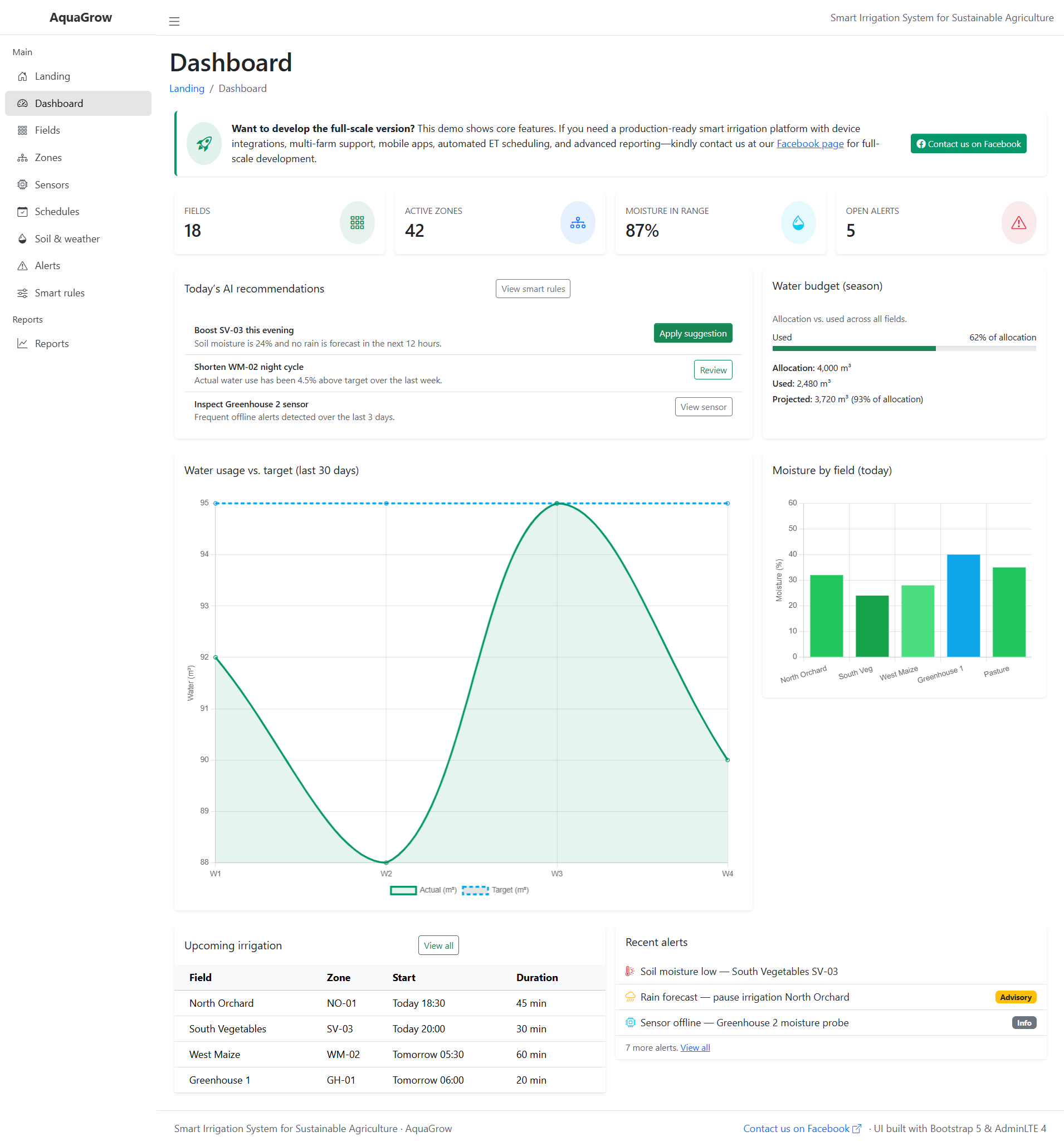
- Real-Time Monitoring Dashboard
- Automated Irrigation Control
- Smart Alerts and Notifications
- Data Analytics and Reporting
- Multi-Zone Irrigation Management
- AI Integration for Predictive Irrigation
- Sustainability and Environmental Impact
- Challenges in Development
- Sensor Calibration and Reliability
- Network Connectivity
- Data Security
- System Scalability
- Use Cases and Applications
- Academic and Research Value
- Future Enhancements
- Economic Benefits for Farmers
- Conclusion
Water is one of agriculture’s most critical resources. Yet, across many farming regions, water is either overused, wasted, or poorly managed due to manual irrigation practices. Traditional irrigation systems often rely on fixed schedules rather than actual soil and weather conditions. The result? Crops receive too much or too little water, operational costs increase, and environmental impact worsens.
The Smart Irrigation System for Sustainable Agriculture addresses these challenges by combining Internet of Things (IoT) devices, real-time data monitoring, and a web-based management platform. This system empowers farmers to make informed decisions using live field data, automated controls, and predictive analytics.
This is more than a hardware project involving sensors and pumps. It is a fully integrated IT solution that connects field devices to a centralized online platform where data is processed, visualized, and acted upon intelligently.
The Problem with Conventional Irrigation
In many farms, irrigation follows a fixed routine:
- Watering at specific times daily
- Manual pump activation
- Estimating soil moisture by observation
While this approach may work at small scales, it becomes inefficient when dealing with:
- Large agricultural lands
- Unpredictable weather conditions
- Limited water supply
- Rising energy costs
Over-irrigation leads to water wastage and soil nutrient leaching. Under-irrigation stresses crops and reduces yield. In both cases, sustainability suffers.
The Concept of Smart Irrigation
A smart irrigation system uses data-driven automation to determine when and how much water crops need.
Instead of relying on assumptions, the system gathers real-time information such as:
- Soil moisture levels
- Temperature
- Humidity
- Rainfall data
- Crop type
This data is transmitted to a web-based platform where algorithms analyze the information and make irrigation decisions.
The system can:
- Automatically activate irrigation when soil moisture drops below a threshold
- Pause watering during rainfall
- Provide alerts for abnormal conditions
- Offer predictive watering schedules
System Architecture Overview
The Smart Irrigation System consists of three major components:
- Field-level IoT devices
- Cloud or server-based processing unit
- Web-based monitoring and control platform
Each layer plays a crucial role in ensuring efficient water management.
1. IoT Sensor Layer
This layer includes:
- Soil moisture sensors
- Temperature sensors
- Humidity sensors
- Water flow meters
- Automated valves and pumps
Sensors collect environmental data at regular intervals. A microcontroller (such as Arduino or ESP32) processes the raw data and sends it to the server via Wi-Fi, GSM, or LoRa communication protocols.
2. Backend Processing and Data Management
The server receives incoming sensor data and stores it in a structured database.
Technologies that may be used include:
- PHP or Node.js for backend logic
- MySQL or PostgreSQL for database storage
- RESTful APIs for communication
- Cloud hosting for scalability
The backend is responsible for:
- Data validation
- Threshold comparison
- Automation logic
- Alert generation
- User authentication
This is where irrigation decisions are triggered based on predefined rules or AI-based predictions.
3. Web-Based Management Platform
The web application acts as the control center for farmers and agricultural managers.
Through a browser, users can:
- Monitor real-time sensor readings
- View graphical data trends
- Manually override irrigation controls
- Set moisture thresholds
- Receive notifications
- Access historical reports
The frontend is typically developed using:
- HTML5 for structure
- CSS3 or Bootstrap for responsive design
- JavaScript for dynamic charts and dashboards
- AJAX for real-time updates
A clean and intuitive interface is essential, especially for users who may not be highly technical.
Key Features of the Smart Irrigation Web Platform
Real-Time Monitoring Dashboard
The dashboard displays:
- Current soil moisture percentage
- Ambient temperature and humidity
- Water tank levels
- Pump status (ON/OFF)
- Active irrigation zones
Data visualization tools such as line graphs and bar charts help farmers understand trends rather than just isolated readings.
Automated Irrigation Control
The system automatically activates irrigation when:
- Soil moisture drops below a configured threshold
- Weather conditions support watering
- Scheduled parameters allow operation
Automation reduces the need for manual supervision and prevents overwatering.
Smart Alerts and Notifications
Users can receive alerts via:
- SMS
- In-app notifications
Alerts may include:
- Low water levels
- Sensor malfunction
- Abnormal soil moisture readings
- Pump failures
Immediate notification prevents potential crop damage.
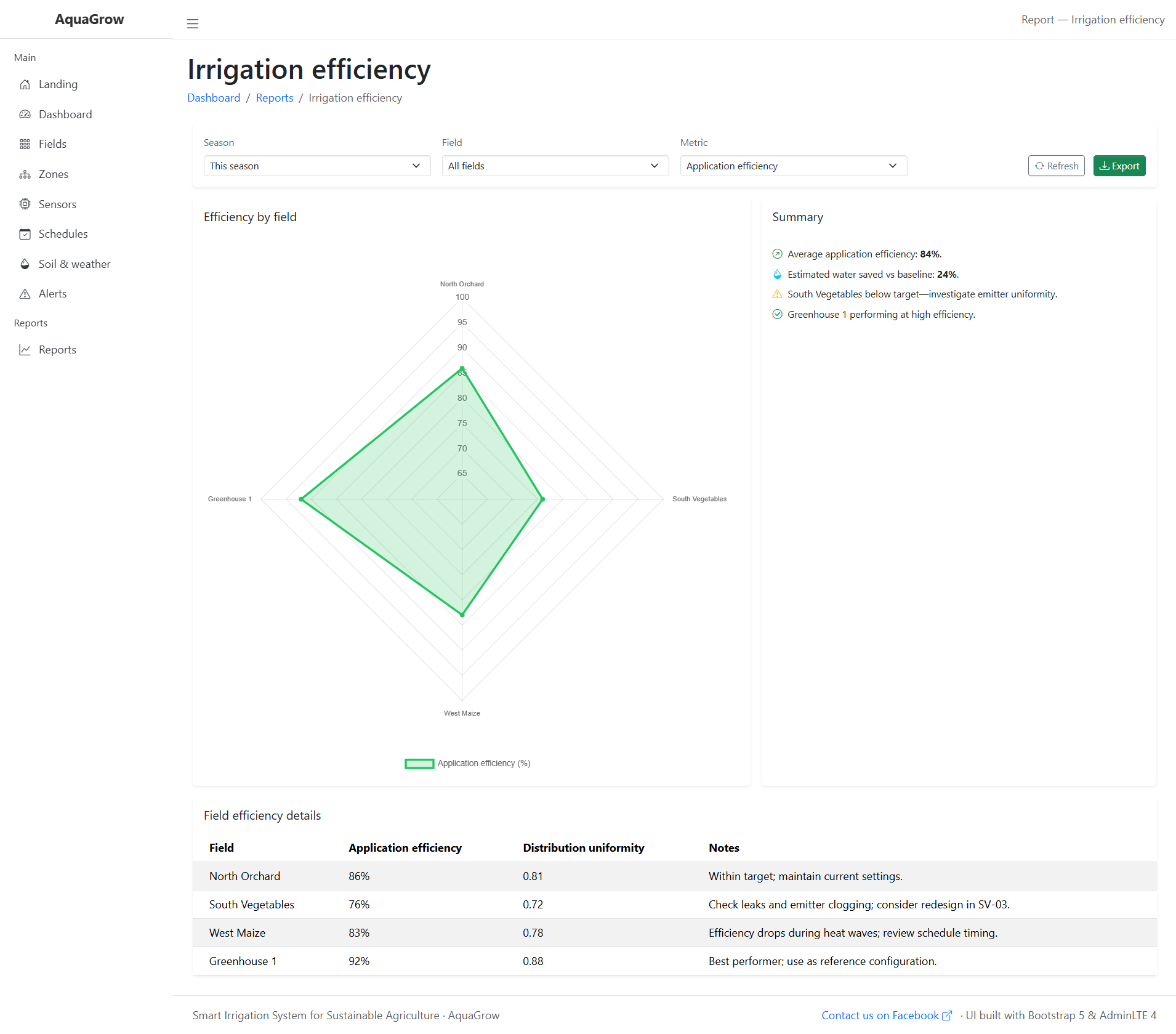
Data Analytics and Reporting
Historical data analysis enables farmers to:
- Compare seasonal performance
- Measure water consumption efficiency
- Evaluate irrigation schedules
- Identify high-consumption zones
Reports can be generated weekly, monthly, or seasonally.
Multi-Zone Irrigation Management
Large farms are divided into zones. Each zone may have:
- Different crop types
- Unique soil conditions
- Separate irrigation schedules
The platform allows independent configuration of each zone, ensuring optimized watering across the farm.
AI Integration for Predictive Irrigation
Advanced implementations can integrate machine learning models to predict irrigation needs.
AI can analyze:
- Historical soil data
- Weather forecasts
- Crop growth cycles
- Seasonal patterns
Based on predictive modeling, the system can recommend:
- Optimal watering times
- Adjusted moisture thresholds
- Seasonal irrigation plans
This transforms the platform from reactive to proactive management.
Sustainability and Environmental Impact
One of the primary goals of smart irrigation is sustainability.
Benefits include:
- Reduced water wastage
- Lower electricity consumption
- Improved soil health
- Increased crop yield
- Reduced fertilizer runoff
In water-scarce regions, this system can significantly contribute to long-term agricultural resilience.
Challenges in Development
Designing and implementing a smart irrigation system is technically demanding.
Sensor Calibration and Reliability
Soil moisture sensors must be:
- Properly calibrated
- Protected from environmental damage
- Regularly maintained
Inaccurate data leads to poor irrigation decisions.
Network Connectivity
Rural areas may experience unstable internet connections.
Possible solutions include:
- GSM-based communication
- Offline data buffering
- Hybrid communication models
Data Security
Since the system operates online, it must implement:
- Secure login authentication
- Encrypted communication protocols
- Database protection measures
Farm data and control mechanisms must not be vulnerable to unauthorized access.
System Scalability
As farms expand, the system should handle:
- Additional sensors
- Increased data volume
- More irrigation zones
Cloud-based infrastructure helps manage scalability efficiently.
Use Cases and Applications
The Smart Irrigation System is suitable for:
- Commercial farms
- Greenhouses
- Agricultural research institutions
- Community farming projects
- Government-supported sustainable agriculture initiatives
It can also serve as an academic project demonstrating real-world application of IoT and web development.
Academic and Research Value
For IT students, this project integrates multiple disciplines:
- Embedded systems programming
- Database design
- Web application development
- API integration
- Data analytics
- Machine learning basics
It demonstrates how software engineering principles can solve practical agricultural problems.
From a research perspective, the system can explore:
- Efficiency improvement metrics
- AI model optimization
- Sustainable resource management strategies
Future Enhancements
The system can evolve further through:
- Integration with weather API services
- Drone-based field monitoring
- Mobile app development
- Blockchain-based agricultural data logging
- Solar-powered IoT units
- Crop disease detection using image processing
Such expansions would further strengthen its role in precision agriculture.
Economic Benefits for Farmers
Smart irrigation does not only benefit the environment. It also impacts profitability.
Farmers can experience:
- Reduced water bills
- Lower labor costs
- Higher yield consistency
- Better crop quality
Over time, the investment in technology pays for itself through operational savings.
Conclusion
The Smart Irrigation System for Sustainable Agriculture represents a meaningful fusion of technology and environmental responsibility. By integrating IoT sensors, backend data processing, and a web-based management platform, the system transforms traditional irrigation into an intelligent, automated process.
It empowers farmers with real-time insights, reduces resource wastage, and supports sustainable farming practices. From a software development standpoint, it demonstrates the practical power of combining hardware integration, database management, web technologies, and AI-driven analytics.
In a world facing climate change, water scarcity, and increasing food demand, smart agricultural solutions are no longer optional—they are essential. This platform is not just an IT project; it is a step toward building a more sustainable and efficient future for agriculture.
You may visit our Facebook page for more information, inquiries, and comments. Please subscribe also to our YouTube Channel to receive free capstone projects resources and computer programming tutorials.
Hire our team to do the project.