Disease Outbreak Monitoring Using GIS and AI: Developing a Smarter Health Surveillance Platform
Table of Contents
- Disease Outbreak Monitoring Using GIS and AI: Developing a Smarter Health Surveillance Platform
- The Need for Modern Disease Surveillance Systems
- Understanding GIS in Disease Monitoring
- Mapping Disease Cases
- Identifying High-Risk Areas
- Monitoring Spread Patterns
- Resource Allocation
- The Role of Artificial Intelligence in Disease Monitoring
- Predictive Outbreak Modeling
- Pattern Detection
- Risk Assessment
- Early Warning Systems
- Concept of an Online Disease Monitoring Platform
- System Architecture Overview
- Frontend Interface
- Backend System
- GIS and AI Integration Layer
- Key Features of the Disease Monitoring System
- Interactive Disease Map
- Case Reporting System
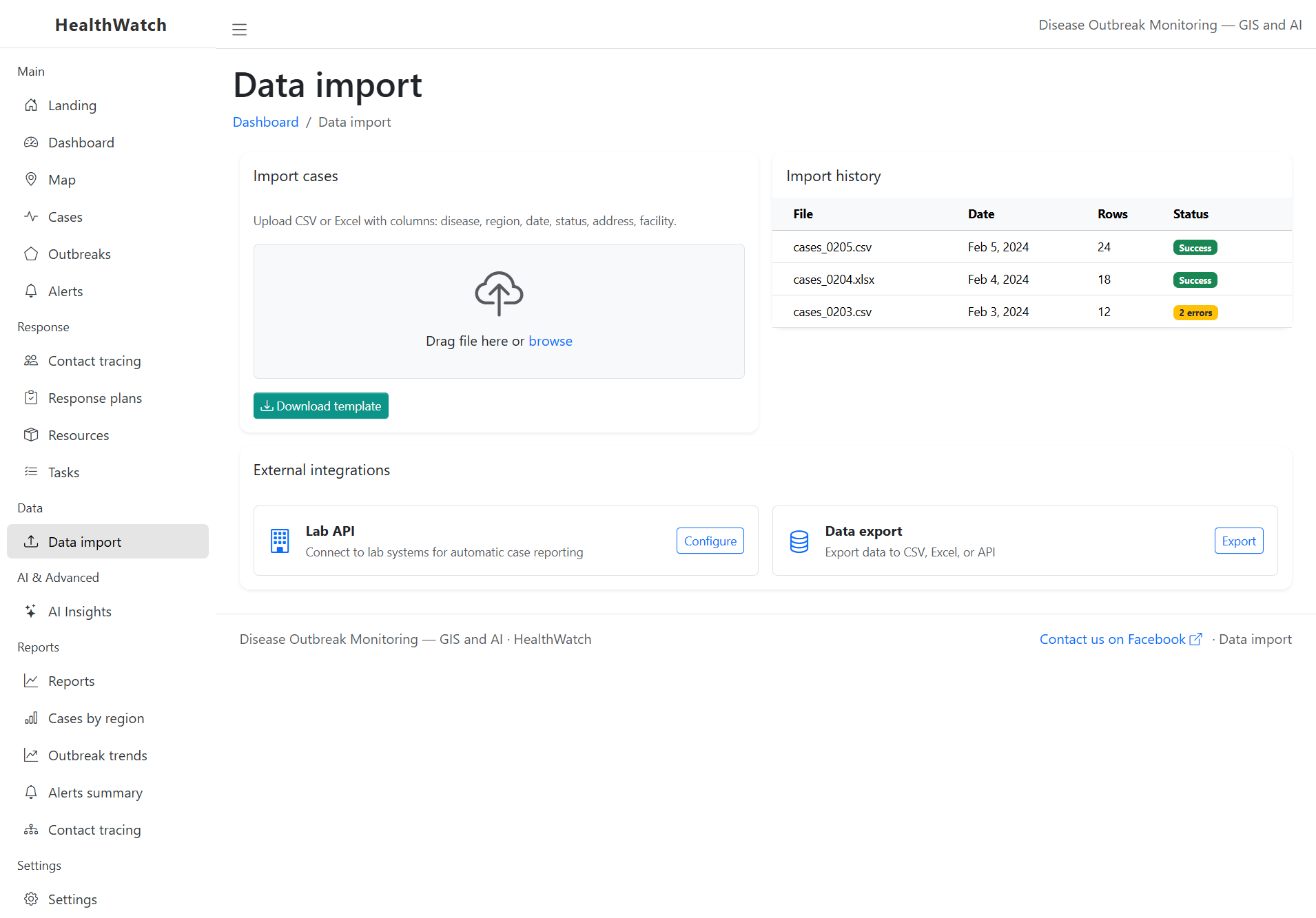
- Real-Time Data Dashboard
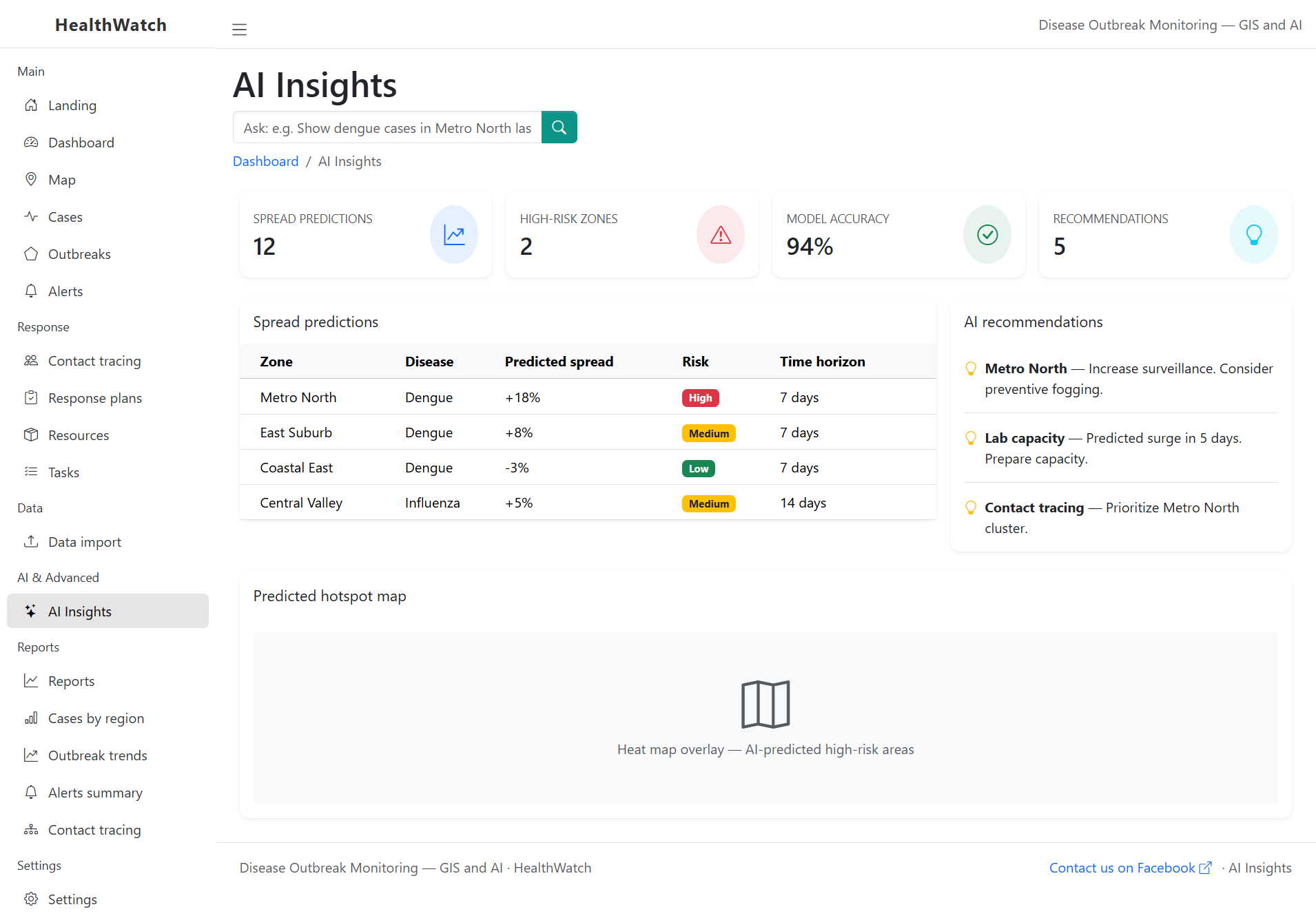
- AI-Based Outbreak Prediction
- Early Warning Alerts
- Historical Data Analysis
- Data Export and Reporting
- Benefits of GIS and AI-Based Disease Monitoring
- Faster Outbreak Detection
- Improved Public Health Response
- Better Resource Allocation
- Data-Driven Decision Making
- Improved Public Awareness
- Applications in Public Health and Research
- Government Health Agencies
- Hospitals and Clinics
- Research Institutions
- Disaster and Emergency Response
- Security and Privacy Considerations
- Challenges in Implementing the Platform
- Data Quality
- Integration of Multiple Data Sources
- Technical Infrastructure
- Public Health Collaboration
- Future of Smart Disease Surveillance
- Mobile Health Reporting
- Internet of Things (IoT) in Healthcare
- AI-Powered Global Health Monitoring
- Integration with Climate and Environmental Data
- Conclusion
Public health monitoring has always been an important responsibility of governments, health organizations, and medical institutions. Detecting and responding to disease outbreaks quickly can save lives, reduce healthcare costs, and prevent widespread health crises. However, traditional disease monitoring systems often rely on manual reporting, fragmented data sources, and slow communication channels.
In recent years, advances in technology have opened new opportunities to modernize disease surveillance systems. One promising approach is the development of a Disease Outbreak Monitoring Platform that integrates Geographic Information Systems (GIS) and Artificial Intelligence (AI). Such a platform enables health authorities to visualize disease cases geographically, analyze outbreak patterns, and predict possible spread using intelligent algorithms.
This article explores the concept of a GIS and AI-powered disease outbreak monitoring system, its features, architecture, benefits, and how it can be implemented as a web-based platform to support modern public health management.
The Need for Modern Disease Surveillance Systems
Disease outbreaks can spread rapidly, especially in densely populated areas. Infectious diseases such as influenza, dengue, COVID-19, and other viral infections often require real-time monitoring to ensure effective containment.
Traditional surveillance methods typically involve healthcare facilities manually submitting reports to local or national health authorities. These reports are often consolidated in centralized databases before analysis begins.
While this approach works, it presents several challenges:
- Delays in data reporting and consolidation
- Limited geographic visualization of disease spread
- Difficulty identifying early outbreak clusters
- Lack of predictive capabilities
Because of these limitations, health officials may only recognize outbreaks after they have already spread significantly.
To overcome these issues, modern systems must incorporate real-time data processing, geographic visualization, and predictive analytics, which is where GIS and AI technologies become valuable tools.
Understanding GIS in Disease Monitoring
A Geographic Information System (GIS) is a technology used to capture, manage, analyze, and visualize geographic or spatial data. In the context of disease monitoring, GIS helps map disease cases based on location.
Instead of simply recording the number of cases in spreadsheets, GIS allows health officials to visualize disease distribution on interactive maps.
This geographic approach provides several important advantages.
Mapping Disease Cases
GIS enables health authorities to map confirmed cases by location, such as cities, districts, or neighborhoods. This makes it easier to identify clusters of infections.
Identifying High-Risk Areas
Spatial analysis helps identify areas with high infection rates. These areas can then be prioritized for medical interventions, testing, or vaccination campaigns.
Monitoring Spread Patterns
By analyzing geographic patterns over time, health officials can observe how diseases spread between locations.
Resource Allocation
GIS data helps governments distribute medical resources such as hospital beds, vaccines, and healthcare personnel more effectively.
Through these capabilities, GIS transforms disease surveillance from simple data collection into a powerful spatial analysis tool.
The Role of Artificial Intelligence in Disease Monitoring
While GIS provides geographic insights, Artificial Intelligence (AI) enhances the system by enabling intelligent analysis and predictive capabilities.
AI can analyze large datasets, identify patterns, and forecast possible outbreaks before they become widespread.
Some of the ways AI contributes to disease monitoring include the following.
Predictive Outbreak Modeling
Machine learning algorithms can analyze historical health data, environmental conditions, and population density to predict potential disease outbreaks.
For example, AI models can estimate the likelihood of dengue outbreaks in areas with certain weather conditions and mosquito populations.
Pattern Detection
AI can detect patterns that might be difficult for humans to identify, such as unusual spikes in infection rates across specific regions.
Risk Assessment
AI models can evaluate risk factors such as population mobility, climate conditions, and healthcare accessibility.
Early Warning Systems
When unusual patterns are detected, the system can automatically alert health authorities, allowing them to respond earlier.
By combining AI with GIS mapping, disease monitoring platforms become significantly more powerful and proactive.
Concept of an Online Disease Monitoring Platform
A Disease Outbreak Monitoring Platform is typically developed as a web-based system that allows healthcare professionals, government agencies, and researchers to monitor disease trends in real time.
The platform collects health data from hospitals, clinics, laboratories, and other sources. This data is then analyzed and visualized using GIS maps and AI-driven analytics.
The system acts as a centralized platform where users can track outbreaks, analyze trends, and generate reports for decision-making.
System Architecture Overview
Developing a disease monitoring platform involves several layers of technology working together.
Frontend Interface
The frontend provides the user interface where health officials interact with the system.
Typical features include:
- Interactive GIS maps
- Data dashboards
- Outbreak reports
- Case submission forms
Technologies such as HTML, CSS, JavaScript, and modern frameworks like React or Vue may be used to build the user interface.
Backend System
The backend handles the system’s core operations and data management.
It performs functions such as:
- Data storage and retrieval
- Processing case reports
- Running AI prediction models
- Generating analytics reports
Common backend technologies include Python, Node.js, Java, or PHP.
GIS and AI Integration Layer
This layer connects the platform with geographic data services and artificial intelligence algorithms.
GIS components may include:
- Map APIs for visualization
- Geolocation services
- Spatial analysis tools
AI components may include:
- Machine learning models for outbreak prediction
- Pattern detection algorithms
- Risk analysis tools
Together, these technologies transform raw health data into meaningful insights.
Key Features of the Disease Monitoring System
A well-designed disease outbreak monitoring platform should include several essential features.
Interactive Disease Map
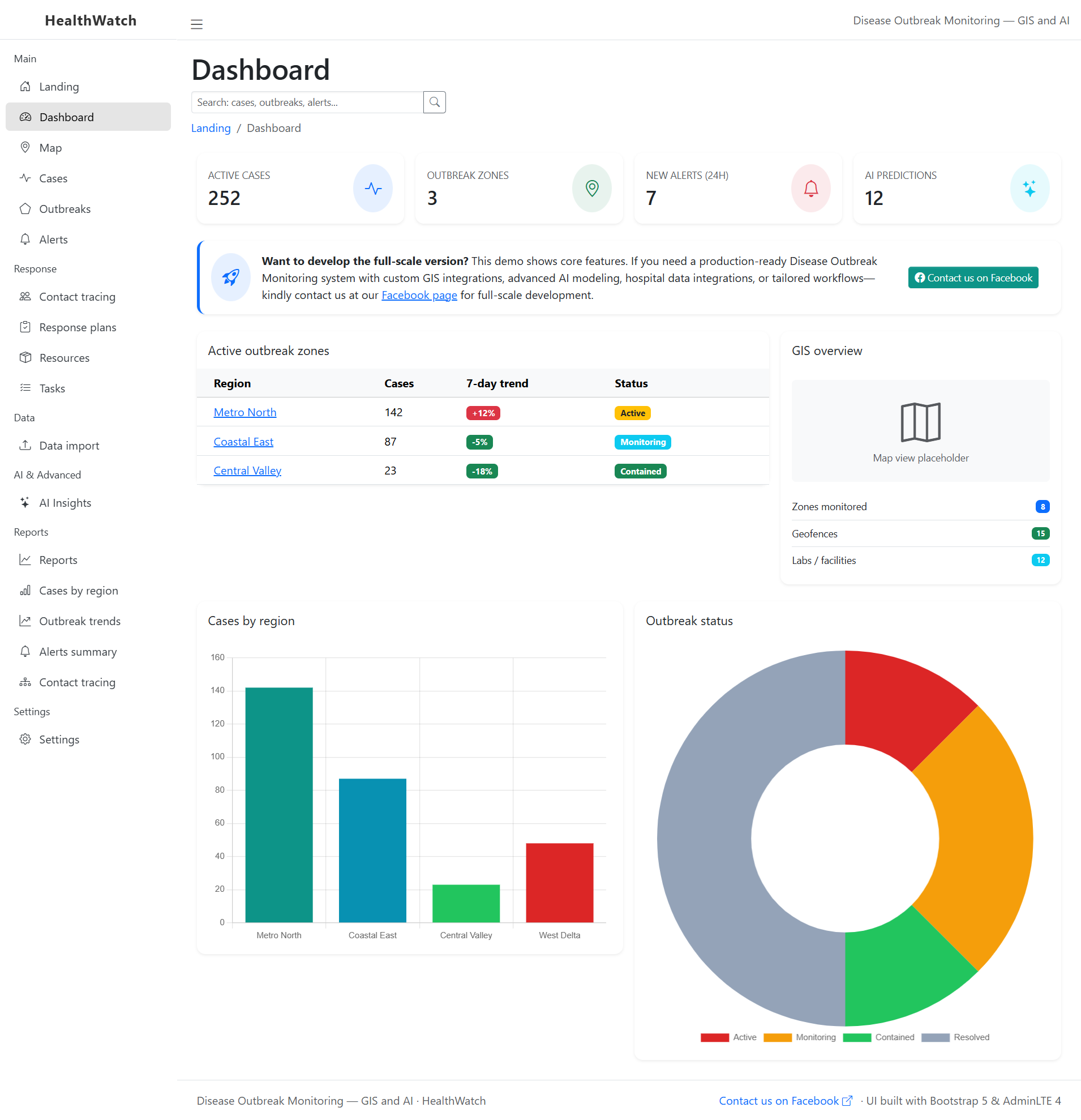
The system should display confirmed cases on a map interface. Users can zoom into regions, cities, or neighborhoods to view case distribution.
Case Reporting System
Healthcare providers should be able to submit case reports through secure digital forms.
This reduces delays in data collection and improves reporting accuracy.
Real-Time Data Dashboard
The dashboard displays important health statistics such as:
- Total number of cases
- Active infections
- Recovered patients
- Mortality rates
These metrics help health officials quickly understand the situation.
AI-Based Outbreak Prediction
AI models analyze trends and provide forecasts about potential outbreaks in specific regions.
Early Warning Alerts
The system can notify health authorities when abnormal increases in cases occur.
Historical Data Analysis
Users can analyze past outbreak data to understand trends and improve future response strategies.
Data Export and Reporting
Health officials can generate reports for policy planning, research, and public communication.
Benefits of GIS and AI-Based Disease Monitoring
Developing a smart disease surveillance platform provides numerous benefits for public health management.
Faster Outbreak Detection
Real-time reporting and AI analysis enable early detection of disease clusters.
Improved Public Health Response
Health authorities can respond quickly with targeted interventions such as testing, quarantine measures, or vaccination drives.
Better Resource Allocation
GIS mapping helps determine where medical resources are needed most.
Data-Driven Decision Making
Policy decisions can be based on data insights rather than assumptions.
Improved Public Awareness
Governments can share visual outbreak data with the public to encourage preventive behavior.
Applications in Public Health and Research
Disease monitoring systems can support multiple sectors beyond healthcare administration.
Government Health Agencies
National and local health departments can track disease spread across regions.
Hospitals and Clinics
Medical institutions can report cases and monitor infection trends.
Research Institutions
Researchers can analyze disease patterns and study epidemiological trends.
Disaster and Emergency Response
During public health emergencies, authorities can coordinate responses more efficiently.
Security and Privacy Considerations
Health data is highly sensitive and must be handled with strict security protocols.
A disease monitoring platform must include safeguards such as:
- Secure authentication and login systems
- Data encryption for sensitive information
- Access control for different user roles
- Compliance with data privacy regulations
Protecting patient data ensures ethical use of health information.
Challenges in Implementing the Platform
Despite the advantages, developing a GIS and AI-based disease monitoring system involves several challenges.
Data Quality
Inaccurate or incomplete health data can reduce the reliability of predictions.
Integration of Multiple Data Sources
Data from hospitals, laboratories, and government systems must be standardized.
Technical Infrastructure
AI models and geographic analysis require sufficient computing resources.
Public Health Collaboration
Effective disease monitoring requires cooperation among multiple institutions.
Addressing these challenges is essential for the success of the platform.
Future of Smart Disease Surveillance
Technology will continue to transform disease monitoring systems in the coming years.
Several emerging trends are expected to play an important role.
Mobile Health Reporting
Mobile applications may allow citizens and healthcare workers to report symptoms in real time.
Internet of Things (IoT) in Healthcare
Smart health devices could provide real-time health data for monitoring outbreaks.
AI-Powered Global Health Monitoring
AI systems may analyze global health data to detect emerging diseases.
Integration with Climate and Environmental Data
Environmental factors such as temperature and rainfall can influence disease spread.
Combining these data sources with AI could improve predictive models.
Conclusion
Disease outbreaks remain one of the most significant challenges in public health management. Traditional surveillance methods often struggle to keep up with the speed at which diseases can spread.
By integrating Geographic Information Systems (GIS) and Artificial Intelligence (AI) into an online disease monitoring platform, health authorities can detect outbreaks earlier, analyze patterns more effectively, and respond with greater precision.
A Disease Outbreak Monitoring System provides powerful tools for mapping cases, predicting disease spread, and supporting data-driven public health decisions.
As technology continues to evolve, intelligent health surveillance platforms will play a crucial role in protecting communities and strengthening global health systems.
You may visit our Facebook page for more information, inquiries, and comments. Please subscribe also to our YouTube Channel to receive free capstone projects resources and computer programming tutorials.
Hire our team to do the project.