Blockchain-Enabled Crowdfunding Platform: A New Era of Transparent and Secure Fundraising
Table of Contents
- Blockchain-Enabled Crowdfunding Platform: A New Era of Transparent and Secure Fundraising
- The Challenges of Traditional Crowdfunding
- Lack of Transparency
- High Platform Fees
- Delayed Fund Releases
- Limited Global Access
- What Is a Blockchain-Enabled Crowdfunding Platform?
- How the Platform Works
- Step 1: Project Creation
- Step 2: Smart Contract Deployment
- Step 3: Contributions
- Step 4: Fund Release or Refund
- Key Features of a Blockchain Crowdfunding Platform
- Smart Contract Automation
- Transparent Transactions
- Decentralized Fund Management
- Global Accessibility
- Lower Transaction Fees
- Investor Dashboard
- Benefits for Project Creators
- Faster Access to Funds
- Reduced Platform Fees
- Increased Trust
- Global Reach
- Benefits for Donors and Investors
- Greater Transparency
- Reduced Risk
- Automated Refunds
- Direct Participation
- Common Use Cases
- Startup Funding
- Community Projects
- Charity and Nonprofit Campaigns
- Creative Projects
- Disaster Relief Campaigns
- Core System Modules
- 1. User Management Module
- 2. Project Management Module
- 3. Smart Contract Module
- 4. Contribution Module
- 5. Dashboard and Analytics Module
- 6. Notification Module
- Technology Stack
- Frontend
- Backend
- Database
- Blockchain Layer
- Security
- Security and Compliance Considerations
- Smart Contract Auditing
- Regulatory Compliance
- User Data Protection
- Challenges of Blockchain Crowdfunding
- Regulatory Uncertainty
- Technical Complexity
- User Adoption
- Transaction Fees
- The Future of Blockchain-Based Fundraising
- Tokenized Investments
- Decentralized Autonomous Organizations (DAOs)
- Cross-Border Fundraising
- Integration with Digital Identity Systems
- Conclusion
Crowdfunding has changed the way people raise money for ideas, causes, and businesses. From creative projects and startups to community initiatives and disaster relief, online crowdfunding platforms have opened doors for individuals and organizations that previously struggled to access traditional funding.
However, despite its popularity, traditional crowdfunding still has several limitations. Many platforms rely on centralized systems that charge high fees, lack transparency, or create delays in fund distribution. Donors sometimes worry about how their contributions are used, while project creators may feel constrained by platform rules and payment processing delays.
A Blockchain-Enabled Crowdfunding Platform offers a new approach—one that focuses on transparency, security, and trust. By using blockchain technology and smart contracts, crowdfunding can become more reliable, efficient, and accessible to a global audience.
The Challenges of Traditional Crowdfunding
Crowdfunding platforms have made fundraising easier, but they are not without problems. Both donors and project creators often face issues that reduce trust and efficiency.
Lack of Transparency
In many cases, donors cannot clearly see how their money is used after contributing. Once funds are transferred to the project owner, tracking their usage becomes difficult.
High Platform Fees
Traditional platforms usually charge service fees and payment processing fees. These costs can significantly reduce the total funds received by the project creator.
Delayed Fund Releases
Some platforms hold funds until campaigns reach their targets or until certain conditions are met. This can delay critical projects that need immediate support.
Limited Global Access
International transactions may involve currency conversion, bank restrictions, or high transfer fees.
These challenges highlight the need for a more transparent and efficient system.
What Is a Blockchain-Enabled Crowdfunding Platform?
A Blockchain-Enabled Crowdfunding Platform is a digital system that uses blockchain technology to manage fundraising campaigns and transactions. Instead of relying on a centralized platform to control funds, the system uses smart contracts to automate and secure the process.
Smart contracts are self-executing programs stored on a blockchain. They automatically enforce the rules of a crowdfunding campaign, such as:
- Releasing funds when a target is reached
- Refunding contributors if goals are not met
- Distributing funds based on milestones
Because all transactions are recorded on a blockchain, they are:
- Transparent
- Immutable
- Secure
- Traceable
This creates a higher level of trust between donors and project creators.
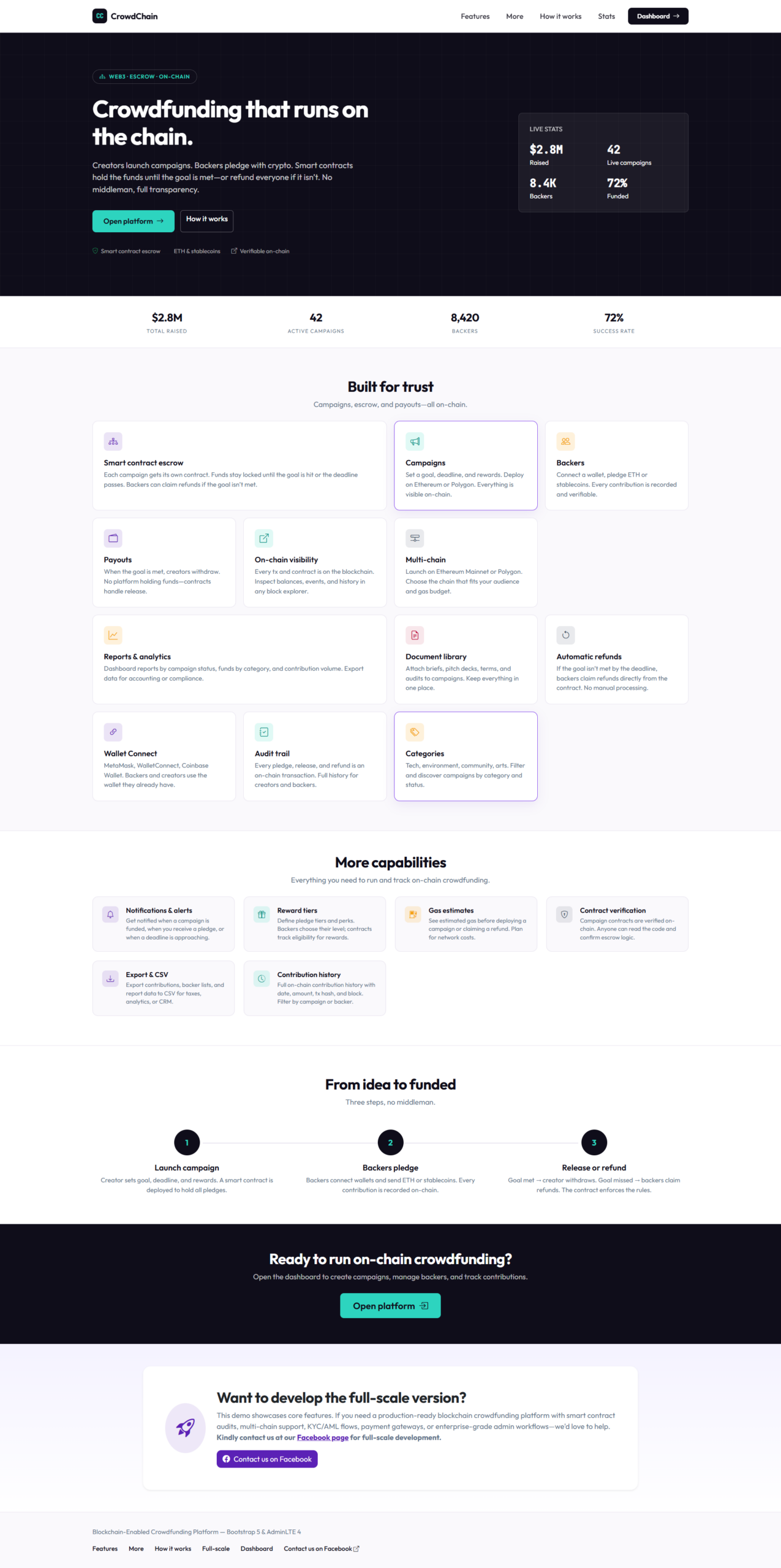
How the Platform Works
Although implementations may vary, most blockchain crowdfunding systems follow a straightforward process.
Step 1: Project Creation
A creator registers on the platform and submits a fundraising campaign. The campaign typically includes:
- Project title and description
- Funding goal
- Deadline
- Milestone plans
- Reward or contribution structure
Step 2: Smart Contract Deployment
Once the project is approved, a smart contract is created on the blockchain. This contract defines:
- Funding target
- Contribution rules
- Conditions for fund release
- Refund policies
The smart contract acts as a neutral, automated escrow.
Step 3: Contributions
Donors or investors contribute funds using supported payment methods, often including:
- Cryptocurrencies
- Digital wallets
- Tokenized assets
Each transaction is recorded on the blockchain.
Step 4: Fund Release or Refund
The smart contract automatically executes based on predefined conditions.
- If the funding goal is reached, funds are released to the project creator.
- If the goal is not met, contributions are refunded to donors.
This process removes the need for manual intervention.
Key Features of a Blockchain Crowdfunding Platform
Smart Contract Automation
Smart contracts handle fund distribution, refunds, and milestone payments automatically.
Transparent Transactions
All contributions and fund releases are recorded on the blockchain, allowing anyone to verify them.
Decentralized Fund Management
Funds are not controlled by a central authority, reducing the risk of manipulation or misuse.
Global Accessibility
Anyone with internet access and a compatible digital wallet can contribute.
Lower Transaction Fees
Blockchain transactions often reduce the need for multiple intermediaries.
Investor Dashboard
Users can:
- Track contributions
- Monitor campaign progress
- View transaction history
- Receive updates from project creators
Benefits for Project Creators
Faster Access to Funds
Smart contracts release funds automatically once conditions are met.
Reduced Platform Fees
Decentralized systems often charge lower fees compared to traditional platforms.
Increased Trust
Transparent transactions build confidence among donors.
Global Reach
Creators can receive support from contributors worldwide.
Benefits for Donors and Investors
Greater Transparency
Donors can verify how funds are collected and distributed.
Reduced Risk
Smart contracts ensure funds are used according to agreed conditions.
Automated Refunds
If the campaign fails, contributions are returned automatically.
Direct Participation
Investors can support projects without intermediaries.
Common Use Cases
Startup Funding
Entrepreneurs can raise capital without relying on traditional investors.
Community Projects
Local initiatives such as infrastructure improvements or social programs can seek public support.
Charity and Nonprofit Campaigns
Transparent donation tracking builds trust with supporters.
Creative Projects
Artists, filmmakers, and designers can fund their work directly through supporters.
Disaster Relief Campaigns
Emergency fundraising efforts can distribute funds quickly and transparently.
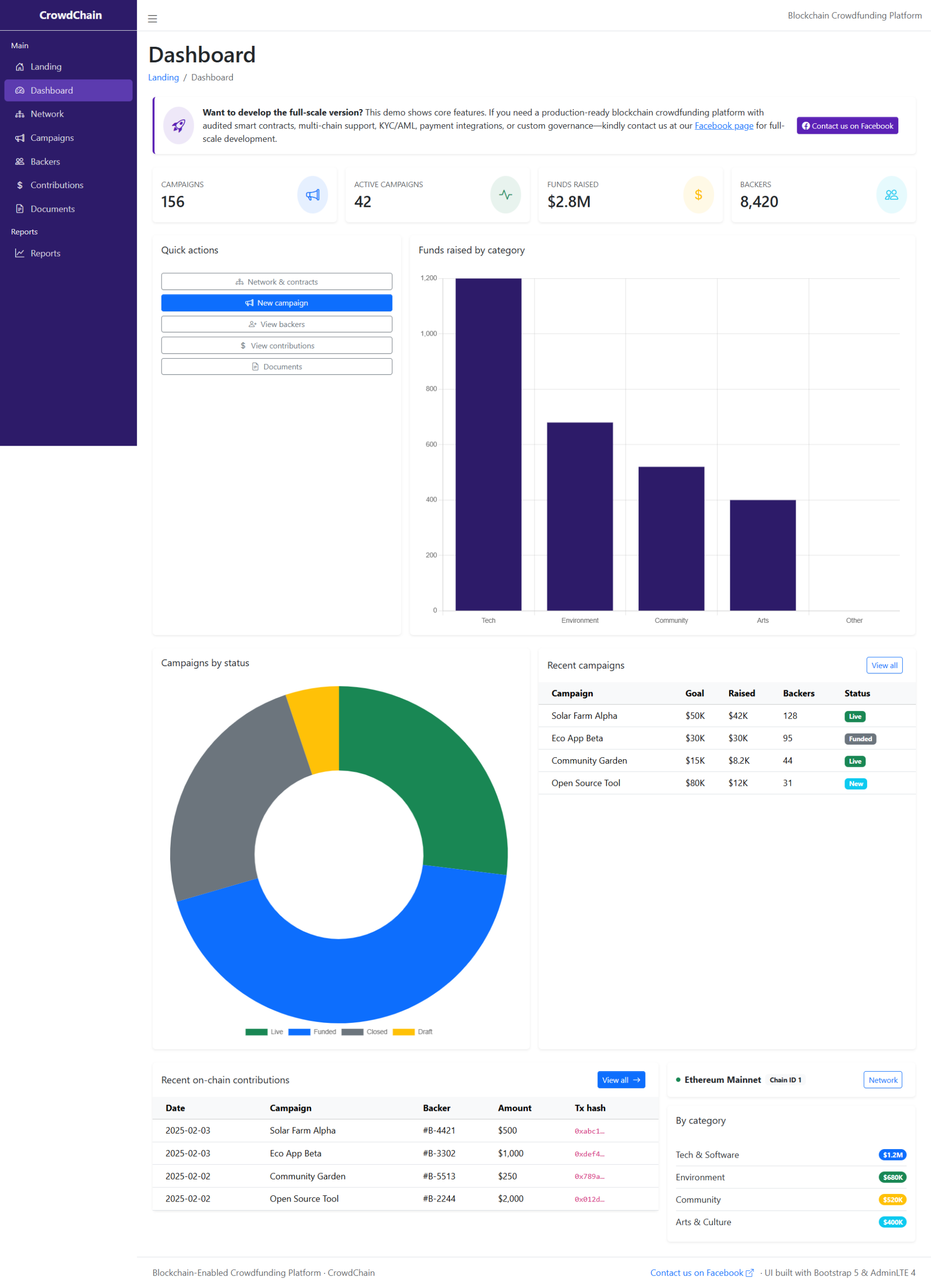
Core System Modules
A blockchain-enabled crowdfunding platform typically includes the following components.
1. User Management Module
- Account registration
- Identity verification
- Role management (creator, donor, admin)
2. Project Management Module
- Campaign creation
- Approval workflows
- Milestone configuration
3. Smart Contract Module
- Contract generation
- Deployment to blockchain
- Automated fund handling
4. Contribution Module
- Payment processing
- Transaction tracking
- Contribution history
5. Dashboard and Analytics Module
- Campaign performance
- Funding progress
- User activity reports
6. Notification Module
- Contribution confirmations
- Campaign updates
- Milestone alerts
Technology Stack
A typical blockchain crowdfunding platform can be built using modern web and blockchain technologies.
Frontend
- HTML5
- CSS3
- JavaScript
- Bootstrap
- AdminLTE dashboard template
Backend
- Node.js, Python, or PHP
- RESTful APIs
Database
- MySQL or PostgreSQL
Blockchain Layer
- Ethereum or similar smart contract platforms
- Solidity for smart contract development
Security
- SSL encryption
- Multi-factor authentication
- Smart contract audits
Security and Compliance Considerations
Blockchain systems offer strong security, but careful planning is still required.
Smart Contract Auditing
Contracts must be tested and reviewed to prevent vulnerabilities.
Regulatory Compliance
Platforms must comply with local laws related to:
- Financial transactions
- Securities regulations
- Anti-money laundering policies
User Data Protection
Personal data should be encrypted and stored securely.
Challenges of Blockchain Crowdfunding
While the technology offers many advantages, there are still some challenges.
Regulatory Uncertainty
Laws regarding blockchain and digital assets vary by country.
Technical Complexity
Developing and maintaining smart contracts requires specialized expertise.
User Adoption
Some users may be unfamiliar with cryptocurrency wallets and blockchain systems.
Transaction Fees
Blockchain network fees may fluctuate depending on network congestion.
The Future of Blockchain-Based Fundraising
Blockchain is expected to reshape crowdfunding in several ways.
Tokenized Investments
Investors may receive digital tokens representing shares or rewards.
Decentralized Autonomous Organizations (DAOs)
Communities may collectively fund and manage projects through blockchain governance.
Cross-Border Fundraising
Global contributions can become faster and more cost-effective.
Integration with Digital Identity Systems
Verified digital identities can improve trust and compliance.
Conclusion
A Blockchain-Enabled Crowdfunding Platform represents a significant step forward in the evolution of online fundraising. By combining smart contracts with decentralized technology, the platform creates a more transparent, secure, and efficient environment for both project creators and contributors.
Instead of relying on centralized authorities, the system uses automated rules and blockchain records to ensure fairness and accountability. This not only builds trust but also opens new opportunities for global participation.
As blockchain technology continues to mature, crowdfunding platforms built on decentralized principles may become the new standard—empowering innovators, communities, and organizations to turn their ideas into reality.
You may visit our Facebook page for more information, inquiries, and comments. Please subscribe also to our YouTube Channel to receive free capstone projects resources and computer programming tutorials.
Hire our team to do the project.