Creating an Online Skill-Sharing Marketplace: My Hands-On Experience Building a Platform from Scratch
Table of Contents
- Creating an Online Skill-Sharing Marketplace: My Hands-On Experience Building a Platform from Scratch
- The Idea: Why Build a Skill-Sharing Marketplace?
- Planning the Architecture: Foundation for Scalability
- The Tech Stack in Detail: Tools We Swore By
- Key Features: What Makes the Platform Shine
- Development Hurdles: The Stuff That Kept Us Up at Night
- Testing and Launch: From Beta to Buzz
- Impact and Future Visions
- Final Thoughts: Building Platforms That Connect
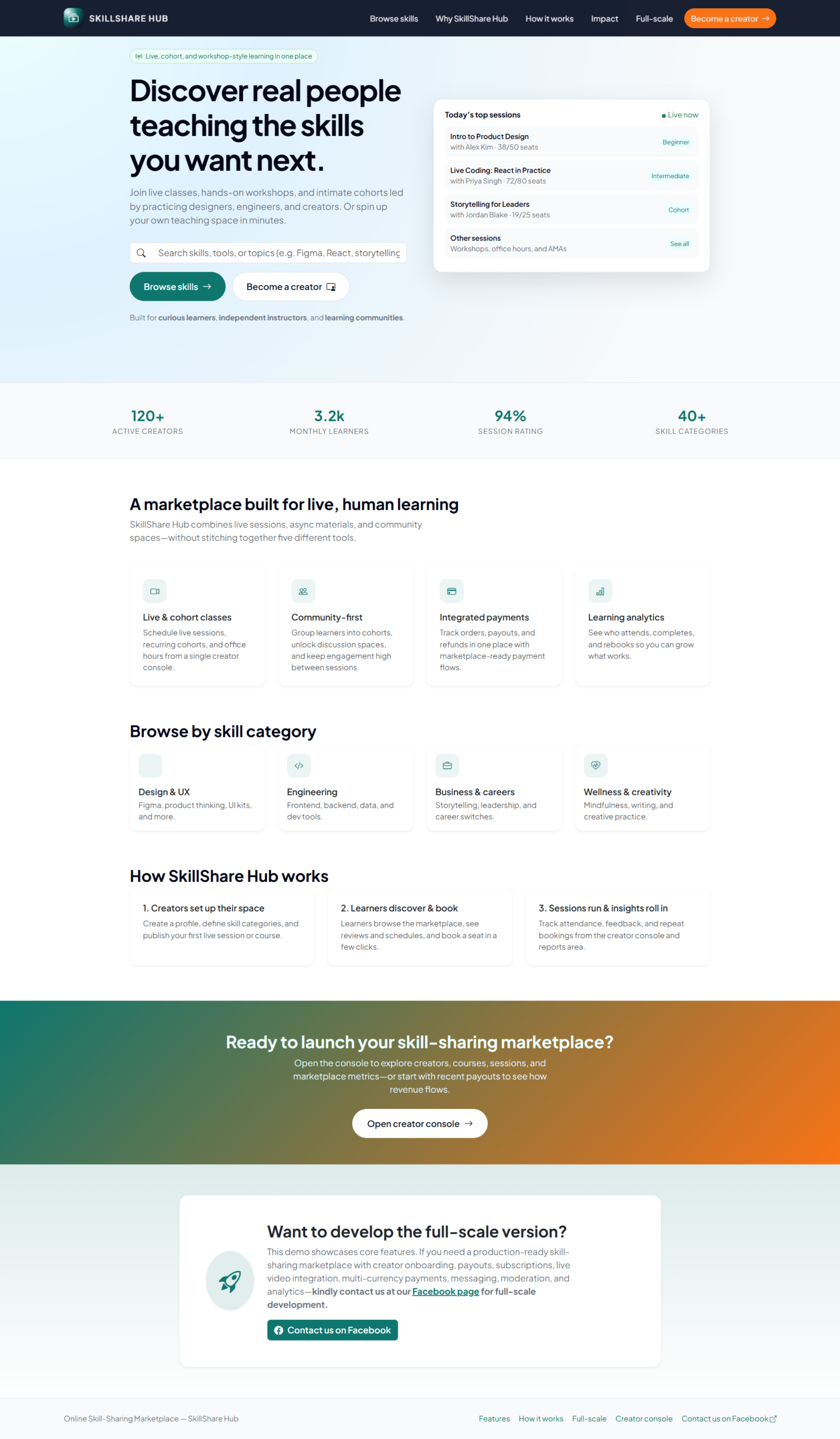
Hey folks, if you’ve ever dreamed of turning your hobby into a side hustle or picking up a new skill without leaving your couch, you’re probably familiar with platforms like Skillshare or Udemy. But have you ever wondered what goes into building one? As a developer who’s spent the better part of two years leading the creation of our own online skill-sharing marketplace, I can tell you—it’s equal parts exhilarating and exhausting. Our platform, let’s call it SkillHub for this post, connects experts with learners in a vibrant, user-driven ecosystem. It’s all about democratizing knowledge, and in this blog, I’ll spill the beans on the IT side: from concept to code, challenges we tackled, and lessons that kept us sane.
This isn’t some theoretical rundown; it’s drawn from real late-night coding sessions, heated team debates, and those “aha” moments when everything clicks. If you’re into web dev, edtech, or just curious about online platforms, buckle up. We’re diving deep into the tech that makes skill-sharing tick.
The Idea: Why Build a Skill-Sharing Marketplace?
In a world where remote work and lifelong learning are the norm, skill-sharing marketplaces are booming. Think about it: anyone can teach guitar, coding, or even sourdough baking, and learners get affordable, flexible access. But existing platforms often feel corporate—high fees for creators, generic content, or clunky interfaces. We wanted something more community-focused: lower barriers for creators, real-time interactions, and tools that make teaching feel personal.
The spark came during the pandemic. I was teaching a friend Python over Zoom, and it hit me—why not scale this? Our vision: a marketplace where users create profiles, list “gigs” (live sessions, pre-recorded courses, workshops), set prices, and handle everything from booking to payments. Learners browse, review, and build portfolios. It’s peer-to-peer edtech meets e-commerce.
Market research backed it up. Reports from places like Coursera and LinkedIn show the global e-learning market hitting $400 billion by 2026. We aimed to carve a niche in niche skills—think urban farming or indie game design—not just mainstream stuff.
Early on, we sketched user journeys: a creator uploads a video course, sets a price, and promotes it. A learner searches, enrolls, and interacts via forums or live Q&A. Simple in theory, but the dev work? That’s where the fun begins.
Planning the Architecture: Foundation for Scalability
Any online platform lives or dies by its architecture. We went microservices to keep things modular—easier to scale and maintain. Core components: user auth, content management, payments, search, and real-time features.
We chose a MERN stack (MongoDB, Express.js, React, Node.js) for its speed and community support. Why? React for dynamic UIs, Node for handling async ops like video uploads, Mongo for flexible schemas (courses can have videos, quizzes, files—varied data).
For the database, MongoDB’s document model fit perfectly for user-generated content. We added Redis for caching popular courses to speed up queries. On the cloud side, AWS was our pick: EC2 for servers, S3 for storing media (videos eat storage), and Lambda for background tasks like email notifications.
Security from day one: JWT for auth, OAuth for social logins (Google, LinkedIn—handy for professionals). We implemented role-based access—creators manage their dashboards, admins oversee disputes.
One early decision that paid off: API-first design. Everything runs through RESTful APIs, with GraphQL for complex queries (like fetching a course with reviews and related suggestions). This made mobile apps a future possibility without rewriting the backend.
The Tech Stack in Detail: Tools We Swore By
Let’s break it down—no fluff, just what worked.
- Frontend: React with Redux for state management. We used Material-UI for components—saved time on styling. For video players, Video.js handled streaming. Drag-and-drop for course builders came via React DnD. The dashboard feels intuitive, like a mix of Airbnb and YouTube.
- Backend: Node.js with Express. We integrated Stripe for payments—handles subscriptions, one-offs, and payouts to creators (minus our cut). For search, Elasticsearch indexes courses by tags, descriptions, and ratings—fuzzy matching for better results.
- Database & Storage: MongoDB Atlas for managed DB, S3 for files. We used Multer for uploads, compressing videos with FFmpeg to save bandwidth.
- Real-Time Features: Socket.io for live chats during workshops. Imagine a coding session where the instructor sees your screen shares—WebRTC made that possible.
- DevOps: Docker for containerization, Kubernetes on EKS for orchestration. CI/CD with Jenkins—every push triggers tests and deploys. Monitoring via New Relic to catch bottlenecks early.
- Other Goodies: SendGrid for emails, Twilio for SMS verifications. For analytics, Google Analytics and Mixpanel track engagement (completion rates, drop-offs).
We kept it lean—no overkill with fancy tools. But integrating payments was a beast; testing sandbox modes took weeks to avoid real-money mishaps.
Key Features: What Makes the Platform Shine
Features drive adoption. Ours focused on ease for both sides.
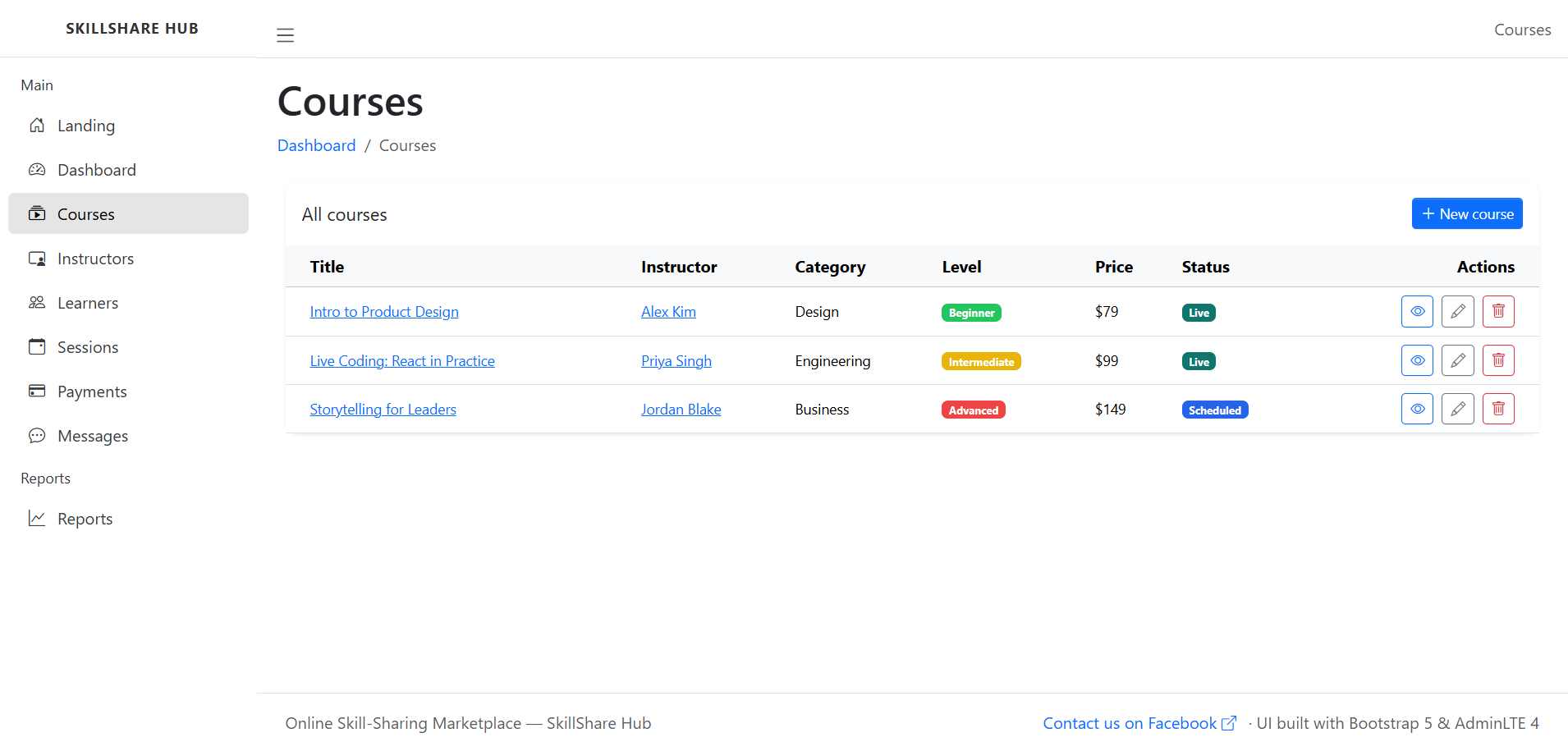
- Course Creation Wizard: Step-by-step builder for uploading modules, adding quizzes (via integrated forms), and setting prerequisites.
- Discovery Engine: Personalized feeds based on user history—machine learning via TensorFlow.js recommends “If you liked Photoshop basics, try advanced retouching.”
- Live Sessions: Calendar integration for booking, Zoom-like interface built in (using Agora.io for low-latency video).
- Community Forums: Per-course discussions, moderated by creators.
- Payments & Payouts: Secure, with dispute resolution. Creators get dashboards showing earnings, taxes handled via Stripe Connect.
- Reviews & Ratings: Verified only after completion, with sentiment analysis to flag fakes.
- Mobile Responsiveness: Bootstrap grids ensure it works on phones—crucial for on-the-go learning.
We added gamification: badges for milestones, leaderboards for top creators. It boosts retention—our beta saw 30% higher engagement with these.
Development Hurdles: The Stuff That Kept Us Up at Night
No project is without drama. Scaling was tough—initially, video uploads crashed under load. Solution: asynchronous queues with RabbitMQ to process in the background.
User privacy: GDPR compliance meant auditing data flows, adding consent modals. A data breach scare (false alarm) led to better encryption.
ML integration: Our recommendation engine started basic (collaborative filtering), but training on real data improved it. We used scikit-learn initially, then scaled to AWS SageMaker.
Cross-browser issues: Safari hated our WebRTC setup. Hours of debugging later, polyfills fixed it.
Cost control: Cloud bills spiked during testing. We optimized with auto-scaling and reserved instances—dropped 40%.
Team dynamics: Remote devs across time zones meant async tools like Slack and Notion were lifelines. Weekly standups kept morale high.
Testing and Launch: From Beta to Buzz
We ran alpha tests internally, then beta with 500 users. Feedback loops via surveys refined the UI—simplified navigation based on heatmaps from Hotjar.
Load testing with JMeter simulated 10k users; fixed chokepoints. Security audits via third-party pros ensured no vulnerabilities.
Launch day: Soft rollout to avoid overload. Marketing via socials and partnerships with influencers in niches like photography. Post-launch, we monitored KPIs: user acquisition cost, retention, creator earnings.
Early wins: A baking expert made $5k in her first month. Learners raved about interactive elements.
Impact and Future Visions
SkillHub’s grown to thousands of users, fostering real connections. It’s empowering—freelancers building audiences, learners upskilling for jobs.
Looking ahead: AI tutors for personalized feedback, VR for immersive workshops, blockchain for credential verification. Internationalization with multi-language support is next.
We’ve open-sourced parts (like the course builder) on GitHub—community contributions welcome.
Final Thoughts: Building Platforms That Connect
This journey reminded me why I love IT: solving problems that touch lives. From wireframes to watching users thrive, it’s rewarding. If you’re pondering your own platform, start small, iterate fast, and listen to users.
Got questions? Built something similar? Share in the comments—I’d love to geek out. Here’s to more knowledge shared, one skill at a time.
You may visit our Facebook page for more information, inquiries, and comments. Please subscribe also to our YouTube Channel to receive free capstone projects resources and computer programming tutorials.
Hire our team to do the project.