Online Cultural Heritage Management System
Table of Contents
- Online Cultural Heritage Management System
- What Is an Online Cultural Heritage Management System?
- The Importance of Digital Cultural Heritage Management
- 1. Risk of Physical Damage
- 2. Fragmented Records
- 3. Limited Public Access
- 4. Lack of Standardized Documentation
- Core Objectives of the System
- Key Features of an Online Cultural Heritage Management System
- 1. Artifact and Asset Catalog
- 2. Cultural Site Management
- 3. Digital Archive and Document Storage
- 4. Restoration and Conservation Tracking
- 5. Event and Cultural Activity Management
- 6. Public Access Portal
- 7. User and Role Management
- Benefits of an Online Cultural Heritage Management System
- Improved Preservation
- Centralized Data Management
- Easier Access to Information
- Better Conservation Planning
- Increased Cultural Awareness
- Use Cases of the System
- Museums and Cultural Centers
- Local Government Units
- National Archives
- Educational Institutions
- Tourism Offices
- Core System Modules
- 1. User Management Module
- 2. Asset Management Module
- 3. Site Management Module
- 4. Archive Module
- 5. Conservation Module
- 6. Event Management Module
- 7. Reporting and Analytics Module
- Technology Stack
- Frontend
- Backend
- Database
- File Storage
- Security
- Integration Possibilities
- GIS Platforms
- Tourism Portals
- National Archives
- Educational Platforms
- Challenges in Implementing the System
- Digitization Effort
- Data Accuracy
- Funding Constraints
- Technical Training
- Future of Cultural Heritage Management Systems
- Virtual Reality (VR) and Augmented Reality (AR)
- Artificial Intelligence
- 3D Scanning and Modeling
- Mobile Applications
- Conclusion
Preserving History Through Digital Innovation
Cultural heritage represents the identity, traditions, and history of a community or nation. It includes historical landmarks, artifacts, documents, artworks, and intangible traditions passed down through generations. However, many cultural heritage assets are at risk due to natural disasters, urban development, neglect, and lack of proper documentation.
Traditional methods of managing cultural heritage often rely on paper-based records, scattered databases, and manual processes. These approaches make it difficult to track artifacts, manage restoration efforts, or provide public access to cultural information.
An Online Cultural Heritage Management System offers a modern, digital solution to preserve, manage, and promote cultural assets. By centralizing records, digitizing artifacts, and providing online access, the system helps institutions protect heritage while making it accessible to researchers, students, and the general public.
What Is an Online Cultural Heritage Management System?
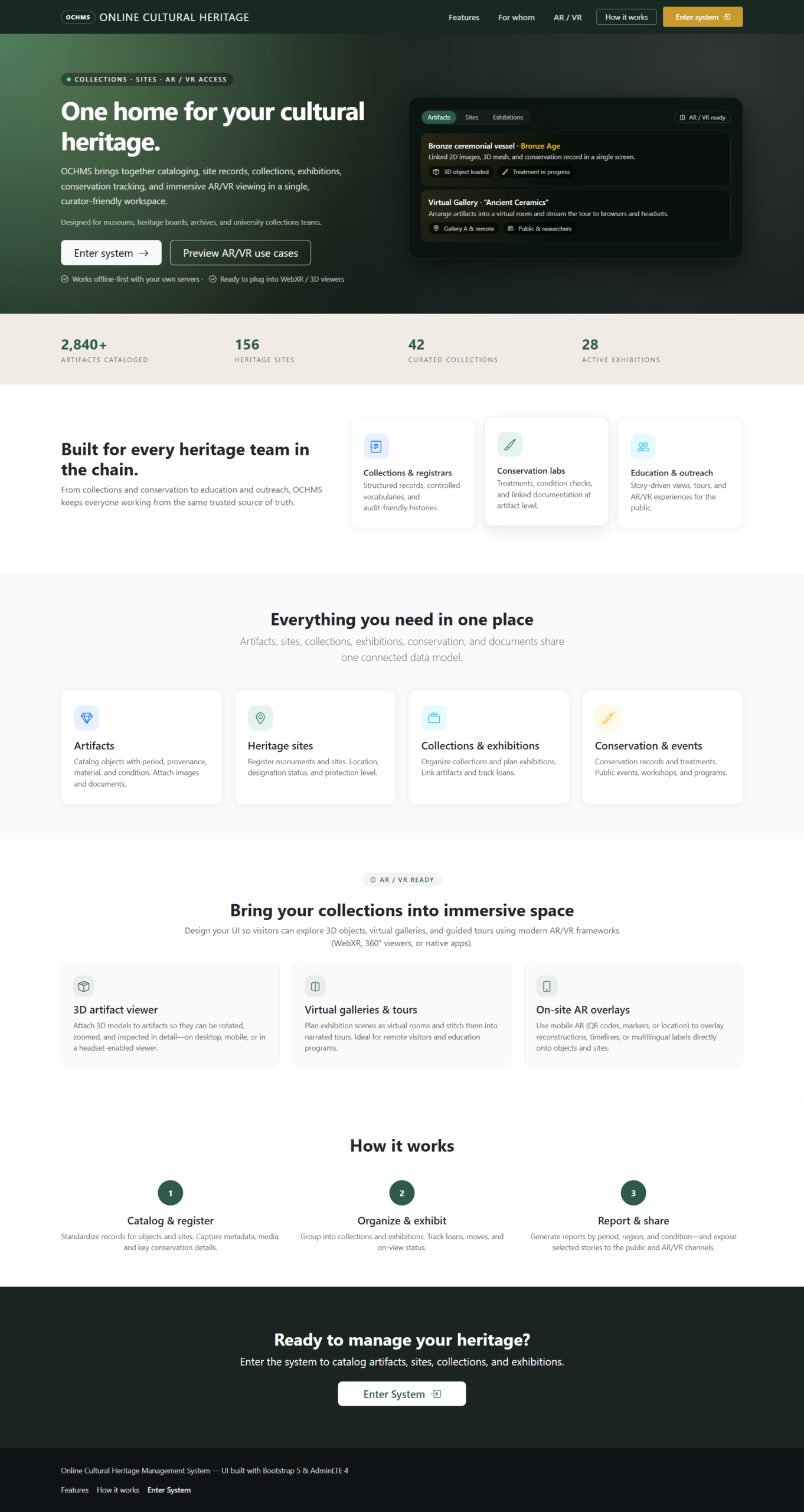
An Online Cultural Heritage Management System is a web-based platform designed to manage and preserve information about cultural assets. The system allows organizations such as museums, cultural offices, archives, and local government units to digitally store, organize, and monitor heritage records.
The platform typically manages:
- Historical artifacts
- Cultural sites and landmarks
- Archival documents
- Photographs and multimedia files
- Restoration and conservation records
- Cultural events and traditions
By digitizing these assets, the system ensures long-term preservation and easier access.
The Importance of Digital Cultural Heritage Management
Many cultural institutions face challenges in preserving historical assets. Without proper systems, valuable information can be lost, damaged, or forgotten.
1. Risk of Physical Damage
Artifacts and documents may deteriorate over time due to environmental factors, disasters, or improper storage.
2. Fragmented Records
Heritage information is often stored in separate files, offices, or systems, making it difficult to locate or update.
3. Limited Public Access
Traditional archives may only be accessible in person, limiting educational and research opportunities.
4. Lack of Standardized Documentation
Inconsistent record-keeping makes it harder to track restoration history or asset ownership.
A digital system addresses these issues by providing a centralized, secure, and accessible platform.
Core Objectives of the System
The main goals of an online cultural heritage management system include:
- Digitizing and preserving cultural assets
- Centralizing heritage records
- Improving asset tracking and monitoring
- Supporting restoration and conservation efforts
- Providing public access to cultural information
- Promoting cultural awareness and education
Key Features of an Online Cultural Heritage Management System
1. Artifact and Asset Catalog
The system provides a digital catalog where administrators can:
- Register cultural assets
- Upload images and multimedia files
- Record descriptions and historical details
- Assign categories and classifications
This creates a comprehensive digital inventory.
2. Cultural Site Management
The platform can manage information about:
- Historical landmarks
- Monuments
- Heritage buildings
- Protected cultural zones
Each site can include:
- Geographic location
- Historical significance
- Ownership or jurisdiction
- Conservation status
3. Digital Archive and Document Storage
The system allows institutions to store:
- Historical documents
- Manuscripts
- Old photographs
- Maps and blueprints
- Audio and video recordings
All files are stored securely with proper indexing for easy retrieval.
4. Restoration and Conservation Tracking
Administrators can record:
- Restoration activities
- Conservation schedules
- Condition assessments
- Maintenance history
This helps ensure proper preservation of assets.
5. Event and Cultural Activity Management
The system can track:
- Cultural festivals
- Heritage exhibitions
- Community events
- Educational programs
This feature helps promote cultural awareness.
6. Public Access Portal
A public-facing portal allows users to:
- Browse cultural assets
- View digital archives
- Learn about local history
- Explore cultural sites
This enhances transparency and educational outreach.
7. User and Role Management
The system supports different user roles, such as:
- Administrators
- Archivists
- Cultural officers
- Researchers
- Public users
Role-based access ensures data security and proper system usage.
Benefits of an Online Cultural Heritage Management System
Improved Preservation
Digitizing records protects cultural information from physical damage or loss.
Centralized Data Management
All heritage information is stored in one secure platform.
Easier Access to Information
Researchers, students, and the public can access cultural data online.
Better Conservation Planning
Authorities can track restoration schedules and asset conditions.
Increased Cultural Awareness
Online access promotes education and appreciation of heritage.
Use Cases of the System
Museums and Cultural Centers
Museums can catalog and manage artifacts digitally.
Local Government Units
LGUs can manage heritage sites, monuments, and cultural events.
National Archives
Archival institutions can digitize and organize historical documents.
Educational Institutions
Schools and universities can use the system for research and learning.
Tourism Offices
Tourism agencies can promote cultural destinations through the platform.
Core System Modules
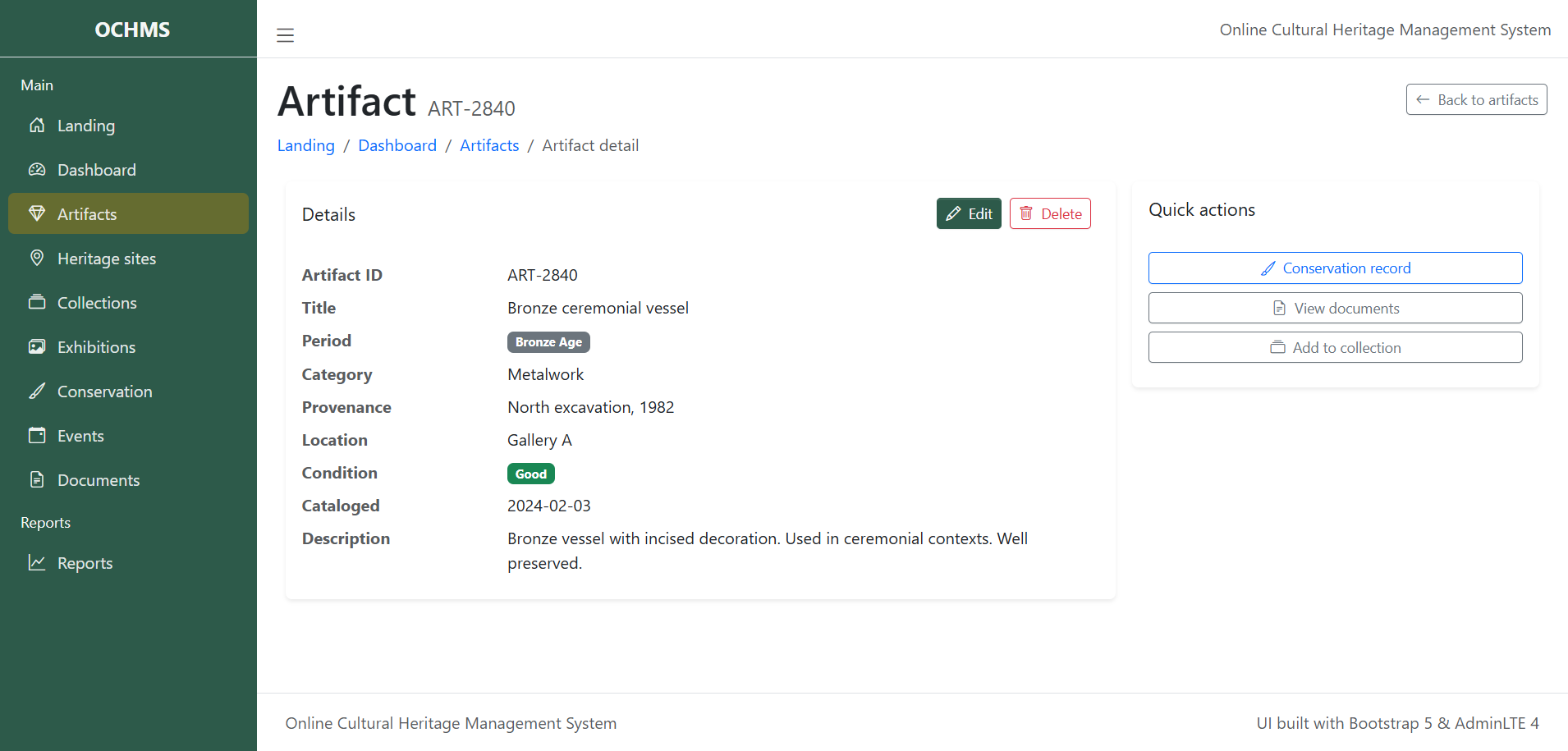
A typical online cultural heritage management system includes the following modules:
1. User Management Module
- Registration and authentication
- Role-based permissions
- Account management
2. Asset Management Module
- Artifact registration
- Category management
- Multimedia uploads
3. Site Management Module
- Cultural site records
- Geographic mapping
- Site status tracking
4. Archive Module
- Document storage
- Search and retrieval
- Digital preservation tools
5. Conservation Module
- Restoration tracking
- Maintenance schedules
- Condition assessments
6. Event Management Module
- Event scheduling
- Activity tracking
- Public announcements
7. Reporting and Analytics Module
- Asset inventory reports
- Conservation reports
- Usage statistics
Technology Stack
A modern cultural heritage management system can be built using reliable web technologies.
Frontend
- HTML5
- CSS3
- JavaScript
- Bootstrap
- AdminLTE dashboard template
Backend
- PHP, Python, or Node.js
- RESTful API architecture
Database
- MySQL or PostgreSQL
File Storage
- Cloud storage or local server
- Media file management
Security
- SSL encryption
- Role-based access control
- Regular data backups
Integration Possibilities
The system can be integrated with:
GIS Platforms
For mapping cultural sites and landmarks.
Tourism Portals
To promote heritage locations and events.
National Archives
For centralized cultural data sharing.
Educational Platforms
For research and learning materials.
Challenges in Implementing the System
Digitization Effort
Scanning and cataloging historical records may require significant time and resources.
Data Accuracy
Incorrect or incomplete historical information can affect system reliability.
Funding Constraints
Cultural institutions may have limited budgets for digital transformation.
Technical Training
Personnel need training to manage digital systems effectively.
Future of Cultural Heritage Management Systems
Advancements in technology will further enhance digital heritage systems.
Virtual Reality (VR) and Augmented Reality (AR)
Users can experience historical sites through immersive digital tours.
Artificial Intelligence
AI can assist in artifact classification, restoration planning, and historical analysis.
3D Scanning and Modeling
Artifacts and sites can be preserved in digital 3D formats.
Mobile Applications
Mobile apps can provide on-site cultural information for tourists and researchers.
Conclusion
An Online Cultural Heritage Management System is a powerful digital solution for preserving and promoting cultural assets. By centralizing records, digitizing artifacts, and providing public access, the system ensures that cultural heritage is protected for future generations.
The platform not only improves preservation and management but also enhances education, tourism, and community engagement. As digital transformation continues, cultural heritage systems will play a crucial role in safeguarding history and identity in the modern world.
You may visit our Facebook page for more information, inquiries, and comments. Please subscribe also to our YouTube Channel to receive free capstone projects resources and computer programming tutorials.
Hire our team to do the project.