Title: Building a Non-Profit Organization Fund Management System: A Digital Approach to Transparency and Efficiency
Introduction
Table of Contents
- Introduction
- Understanding the Challenges of Fund Management in Non-Profit Organizations
- 1. Tracking Donations from Multiple Sources
- 2. Managing Project-Based Funding
- 3. Generating Transparent Financial Reports
- 4. Preventing Mismanagement
- What is a Non-Profit Organization Fund Management System?
- Key Features of a Fund Management System
- 1. Donation Management
- 2. Donor Management
- 3. Fund Allocation and Budget Tracking
- 4. Expense Monitoring
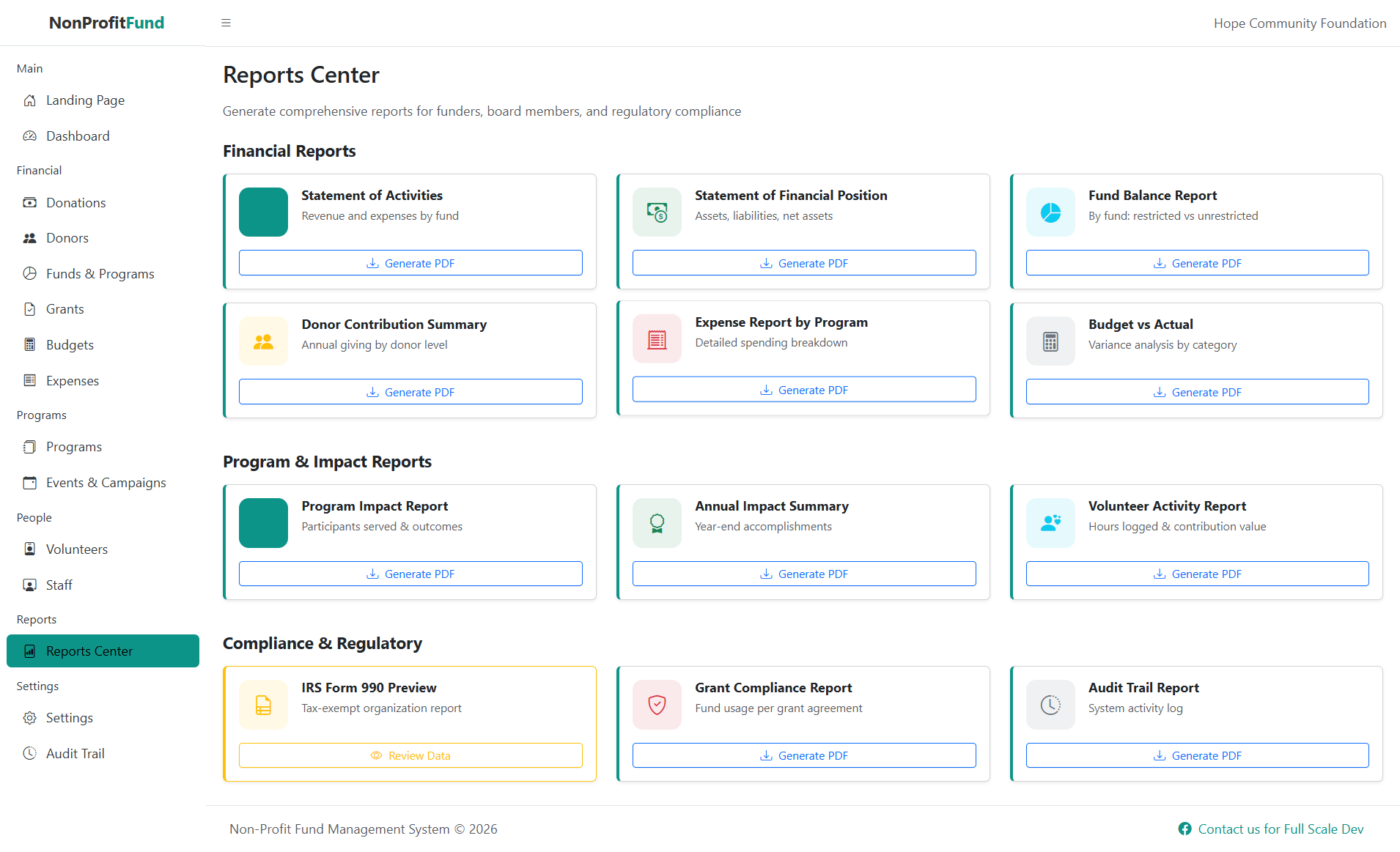
- 5. Financial Reporting and Analytics
- 6. User Access and Role Management
- 7. Automated Notifications
- Technology Stack for Developing the Platform
- Frontend Development
- Backend Development
- Database Management
- Cloud Hosting
- Development Process
- 1. Requirement Gathering
- 2. System Design
- 3. System Development
- 4. Testing and Quality Assurance
- 5. Deployment and Maintenance
- Security and Data Protection
- Benefits of Implementing a Fund Management System
- 1. Improved Transparency
- 2. Better Financial Organization
- 3. Time Efficiency
- 4. Accurate Reporting
- 5. Enhanced Donor Relationships
- Future Opportunities and Enhancements
- Conclusion
Non-profit organizations play a vital role in addressing social issues, supporting communities, and delivering humanitarian services. Whether the goal is education, healthcare, disaster relief, or environmental protection, these organizations rely heavily on donations, grants, and funding from supporters who believe in their mission.
However, managing these funds responsibly can be a complex task. Donations may come from different sources, funds may be allocated to multiple projects, and transparency is always expected by donors and stakeholders. Traditional methods like spreadsheets, manual records, or basic accounting tools often fail to provide the level of tracking and reporting required.
This is where a Non-Profit Organization Fund Management System becomes essential. By developing an online platform specifically designed to manage donations, monitor expenses, and generate transparent financial reports, organizations can streamline their operations while building greater trust with donors.
In this blog post, we will explore the concept of a fund management system for non-profits, discuss its key features, examine the development process, and highlight the advantages of adopting a digital platform.
Understanding the Challenges of Fund Management in Non-Profit Organizations
Unlike commercial businesses, non-profit organizations operate with a different financial structure. Their primary objective is not profit but impact. However, this does not reduce the importance of proper financial management. In fact, transparency and accountability are even more critical for organizations that depend on public trust.
Some of the common challenges faced by non-profit organizations include:
1. Tracking Donations from Multiple Sources
Donations may come from individuals, corporations, fundraising campaigns, or government grants. Keeping track of these funds manually can easily lead to confusion or errors.
2. Managing Project-Based Funding
Many donations are earmarked for specific projects or causes. Organizations must ensure that funds are used exactly as intended.
3. Generating Transparent Financial Reports
Donors and stakeholders often request reports showing how funds are utilized. Without a proper system, generating accurate reports can be time-consuming.
4. Preventing Mismanagement
Financial mismanagement can damage the reputation of a non-profit organization. A well-structured system helps minimize risks and maintain accountability.
What is a Non-Profit Organization Fund Management System?
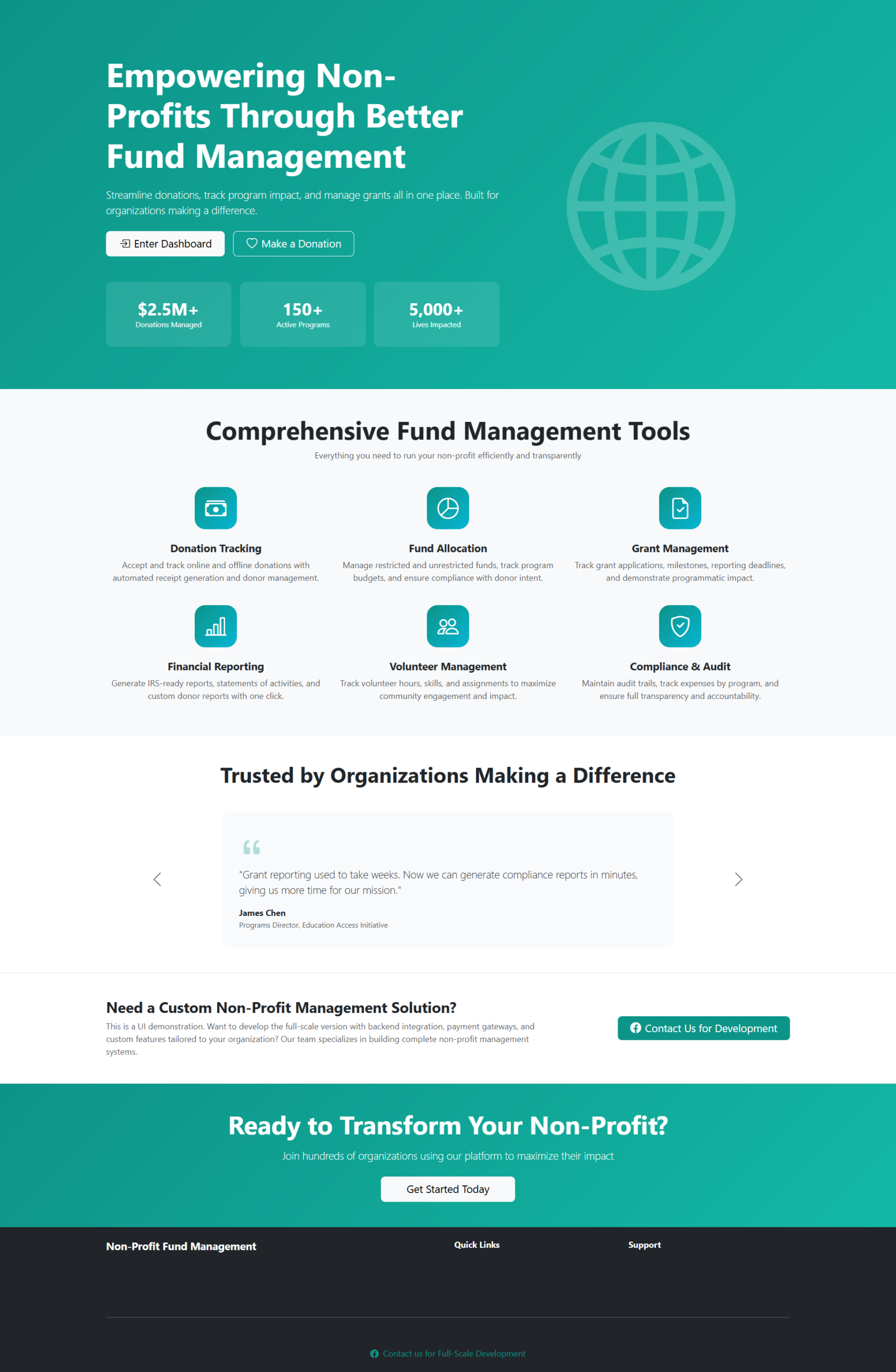
A Non-Profit Organization Fund Management System is an online platform designed to help organizations manage donations, track fund allocations, monitor expenditures, and generate financial reports.
The system acts as a centralized digital environment where administrators, finance officers, and authorized staff can monitor financial activities in real time.
Instead of relying on scattered records or spreadsheets, all financial transactions are stored securely within the platform. This improves accuracy, transparency, and operational efficiency.
Key Features of a Fund Management System
When developing a digital platform for managing non-profit funds, several important features should be included to ensure functionality and reliability.
1. Donation Management
Donation tracking is one of the most critical features of the system. It allows organizations to record and monitor contributions from different donors.
The system should allow administrators to:
- Record new donations
- Identify donation sources
- Track donation amounts
- Categorize donations by campaign or project
- Generate donation receipts
This ensures that every contribution is properly documented.
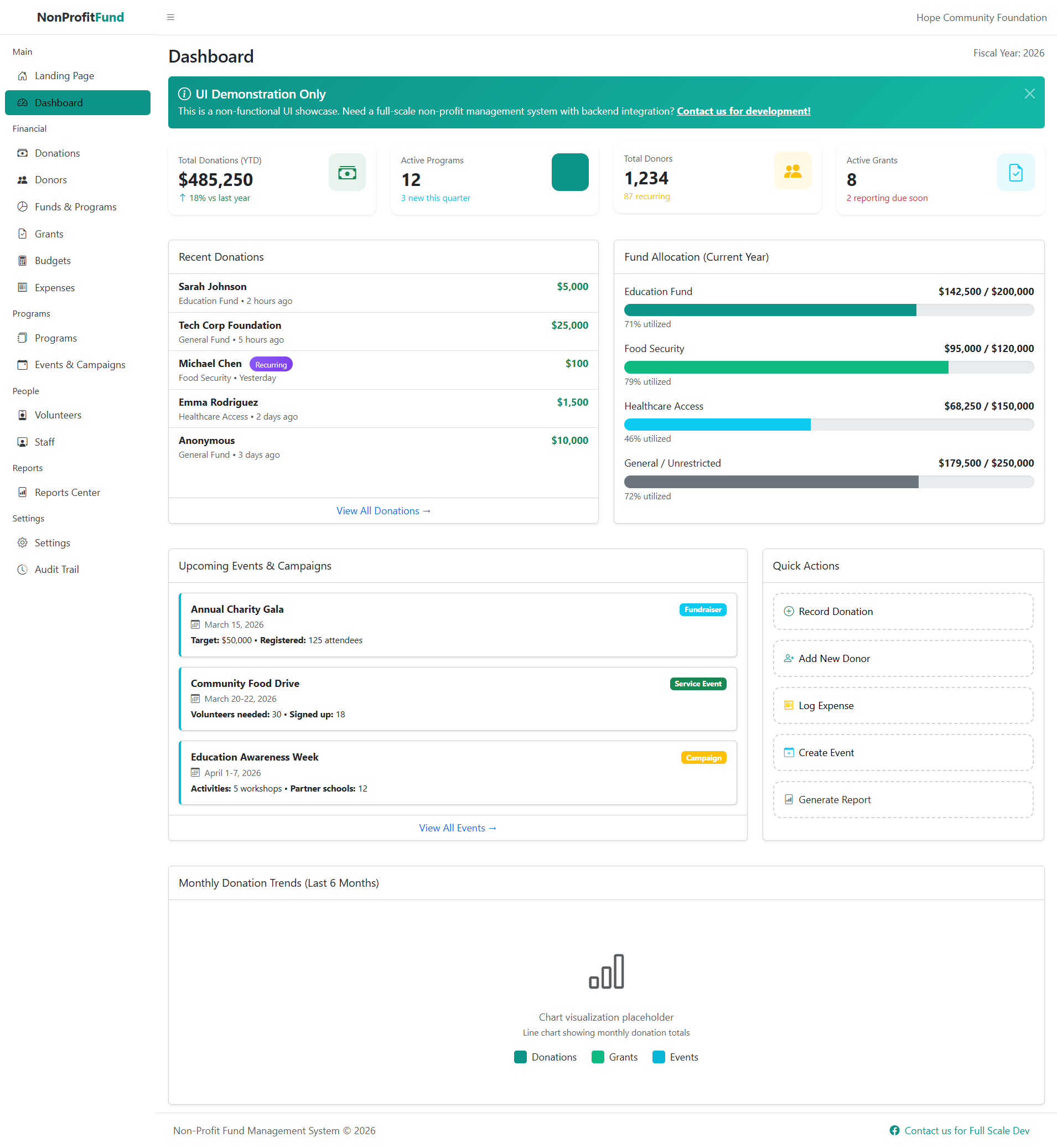
2. Donor Management
Maintaining good relationships with donors is essential for long-term sustainability.
A donor management module stores detailed information about contributors, including:
- Donor name and contact information
- Donation history
- Preferred causes or campaigns
- Communication records
With this data, organizations can easily acknowledge donations and maintain strong connections with supporters.
3. Fund Allocation and Budget Tracking
Many non-profits operate multiple programs or projects simultaneously. Each initiative may have its own budget and funding requirements.
A fund allocation feature allows administrators to assign donations to specific projects and monitor how the funds are used.
This ensures that resources are distributed properly and prevents overspending.
4. Expense Monitoring
Transparency requires organizations to track not only incoming funds but also outgoing expenses.
The system should allow staff members to:
- Record project expenses
- Attach supporting documents
- Categorize expenses
- Monitor budget utilization
This feature provides a clear view of how funds are spent.
5. Financial Reporting and Analytics
Financial reporting tools help organizations present clear and transparent information to stakeholders.
Reports may include:
- Donation summaries
- Project fund utilization
- Expense breakdowns
- Monthly or annual financial statements
These reports can be generated automatically, saving time and reducing the risk of manual errors.
6. User Access and Role Management
Not every staff member should have full access to financial data.
A well-designed system includes role-based access control, allowing different users to perform specific tasks.
For example:
- Administrators manage the entire system
- Finance officers handle transactions and reports
- Project managers view budget allocations
- Volunteers may access limited information
This structure improves security and operational control.
7. Automated Notifications
Automated notifications help organizations stay organized and responsive.
The system can send alerts for:
- New donations received
- Budget thresholds reached
- Upcoming financial reporting deadlines
- Donation acknowledgment reminders
These notifications ensure that no important activity is overlooked.
Technology Stack for Developing the Platform
Developing a Non-Profit Fund Management System requires selecting reliable and scalable technologies.
Frontend Development
The frontend is responsible for the user interface and user experience.
Common technologies include:
- HTML
- CSS
- JavaScript
- React or Vue frameworks
A clean and intuitive interface ensures that users can easily navigate the platform.
Backend Development
The backend manages data processing, business logic, and system operations.
Popular backend technologies include:
- Node.js
- Django (Python)
- Laravel (PHP)
These frameworks help developers build robust and secure applications.
Database Management
A reliable database is essential for storing financial and donor information.
Common choices include:
- MySQL
- PostgreSQL
- MongoDB
Relational databases are particularly suitable for financial data due to their structured format.
Cloud Hosting
Deploying the platform in the cloud provides several advantages, including:
- Remote accessibility
- Secure data storage
- Automated backups
- High system availability
Cloud infrastructure also allows organizations to scale the platform as their operations grow.
Development Process
Creating an online fund management system involves several stages.
1. Requirement Gathering
The first step is understanding the needs of the organization.
Developers work with stakeholders to identify:
- Financial workflows
- Reporting requirements
- Security needs
- User roles and permissions
This ensures that the final system aligns with operational goals.
2. System Design
During the design phase, developers create the system architecture.
This includes:
- Database design
- User interface wireframes
- Application structure
- API planning
Good system design reduces development complexity.
3. System Development
Once the design is finalized, developers begin building the platform.
Tasks in this stage include:
- Coding the frontend interface
- Implementing backend logic
- Connecting the database
- Integrating security features
Regular testing ensures that the system functions properly.
4. Testing and Quality Assurance
Testing is crucial, especially for financial systems.
Developers perform various types of testing, including:
- Functional testing
- Security testing
- Performance testing
- User acceptance testing
This helps identify and fix issues before deployment.
5. Deployment and Maintenance
After successful testing, the system is deployed for real-world use.
However, continuous maintenance is necessary to:
- Fix bugs
- Update features
- Improve security
- Adapt to organizational changes
Security and Data Protection
Since the platform handles financial data and donor information, strong security measures must be implemented.
Important practices include:
- Data encryption
- Secure login authentication
- Regular data backups
- Activity logging
- Access control management
These measures help protect sensitive information and maintain donor trust.
Benefits of Implementing a Fund Management System
Organizations that adopt a digital fund management platform gain several advantages.
1. Improved Transparency
Donors can see how their contributions are used, which strengthens trust and credibility.
2. Better Financial Organization
All financial records are stored in a centralized system, making them easier to access and manage.
3. Time Efficiency
Automation reduces manual work, allowing staff to focus more on their mission.
4. Accurate Reporting
Automated financial reports reduce human error and improve decision-making.
5. Enhanced Donor Relationships
Maintaining accurate donor records helps organizations communicate effectively and build long-term support.
Future Opportunities and Enhancements
As technology evolves, fund management systems can incorporate more advanced capabilities.
Future improvements may include:
- Artificial Intelligence for donation trend analysis
- Mobile applications for easier access
- Blockchain-based transparency for donations
- Integration with online payment platforms
These innovations will further strengthen the role of technology in non-profit operations.
Conclusion
Managing funds responsibly is a fundamental responsibility for any non-profit organization. Donors place their trust in organizations to use their contributions wisely, and maintaining transparency is key to sustaining that trust.
A Non-Profit Organization Fund Management System provides a practical solution to the challenges of tracking donations, managing budgets, and generating financial reports. By developing an online platform tailored to these needs, organizations can significantly improve efficiency, accountability, and operational effectiveness.
Through thoughtful design, secure development, and continuous improvement, such a system can become a powerful tool that supports the mission of non-profit organizations and helps them create meaningful social impact.
You may visit our Facebook page for more information, inquiries, and comments. Please subscribe also to our YouTube Channel to receive free capstone projects resources and computer programming tutorials.
Hire our team to do the project.