Title: Building an Accounts Receivable and Payable System for Modern Businesses
Introduction
Table of Contents
- Introduction
- Understanding Accounts Receivable and Payable
- Why Businesses Need a Digital AR/AP System
- 1. Improved Accuracy
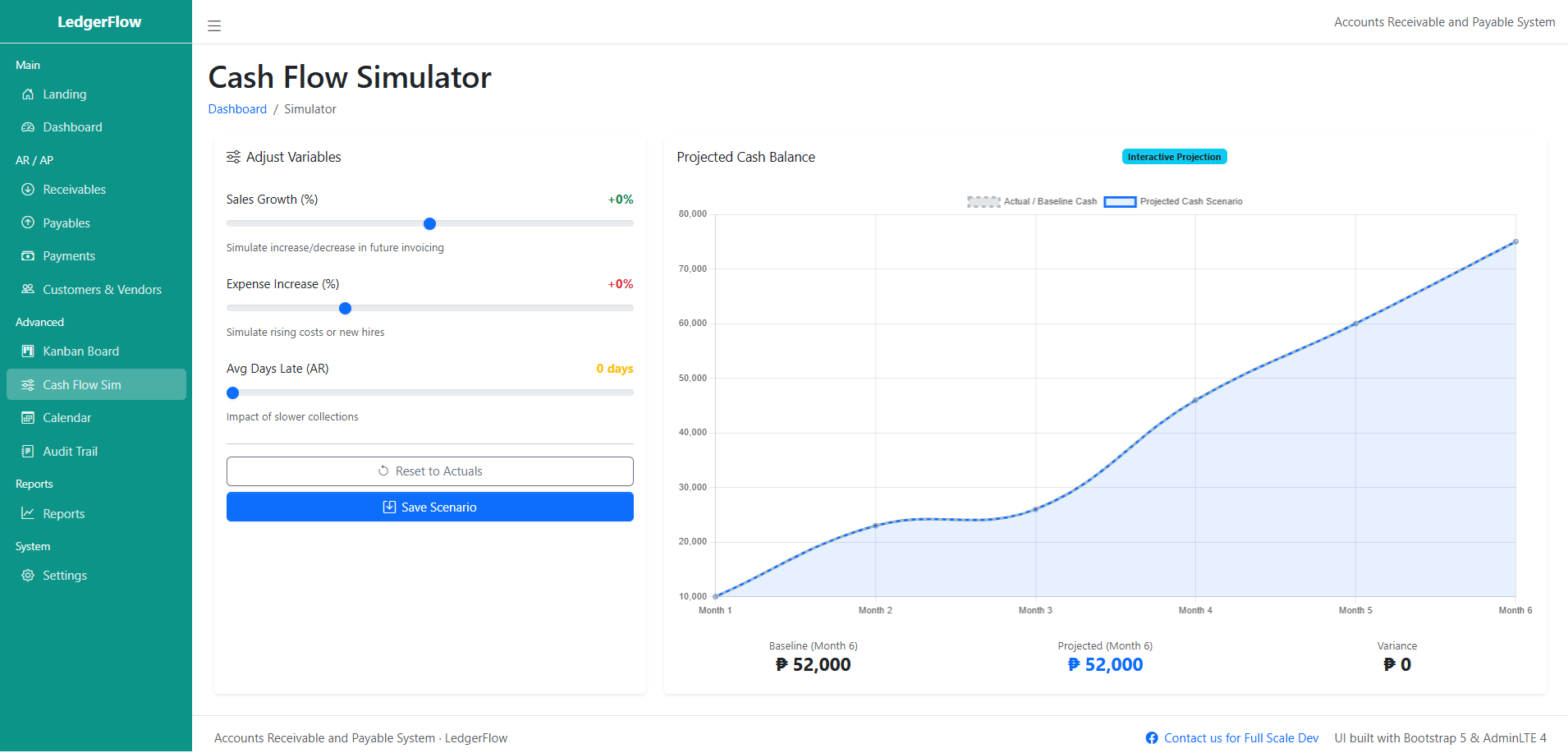
- 2. Better Cash Flow Monitoring
- 3. Increased Efficiency
- 4. Transparency and Accountability
- 5. Scalability
- Core Features of an Accounts Receivable and Payable System
- 1. User Authentication and Role Management
- 2. Invoice Management
- 3. Vendor and Client Management
- 4. Payment Tracking
- 5. Automated Notifications
- 6. Financial Reporting and Analytics
- 7. Integration with Other Systems
- Technology Stack for Development
- Frontend Technologies
- Backend Technologies
- Database Management
- Cloud Infrastructure
- Development Process
- 1. Requirement Analysis
- 2. System Design
- 3. Implementation
- 4. Testing
- 5. Deployment and Maintenance
- Security Considerations
- Benefits of Implementing an AR/AP System
- 1. Reduced Administrative Work
- 2. Faster Payment Processing
- 3. Improved Financial Visibility
- 4. Stronger Vendor Relationships
- 5. Better Decision-Making
- Future Enhancements
- Conclusion
Financial management is one of the most critical components of running a successful business. Whether it is a startup, a medium-sized enterprise, or a large corporation, tracking incoming and outgoing payments is essential to maintain healthy cash flow. Traditionally, many organizations relied on spreadsheets, manual ledgers, or disconnected software tools to monitor accounts receivable and accounts payable. While these methods worked in the past, they are increasingly inefficient in today’s digital environment.
This is where an Accounts Receivable and Payable System becomes valuable. By developing an online platform specifically designed to handle financial transactions, organizations can automate processes, reduce errors, and gain better visibility over their financial activities.
In this blog post, we will explore the concept, development process, key features, and benefits of an Accounts Receivable and Payable System. We will also discuss how modern technologies can enhance the efficiency of financial operations through automation and integration.
Understanding Accounts Receivable and Payable
Before diving into the technical aspects of development, it is important to understand the difference between accounts receivable and accounts payable.
Accounts Receivable (AR) refers to the money owed to a business by its customers for goods or services delivered but not yet paid. For example, when a company sells products on credit, the outstanding amount becomes part of its accounts receivable.
Accounts Payable (AP), on the other hand, represents the money a business owes to its suppliers or vendors. These are liabilities that the organization needs to settle within a specific timeframe.
Managing both AR and AP effectively ensures that businesses maintain a balanced cash flow and avoid financial disruptions. A digital system designed for these functions helps companies track, manage, and analyze transactions in a structured way.
Why Businesses Need a Digital AR/AP System
Manual financial tracking can create numerous problems, especially as a business grows. Human errors, delayed reporting, and lack of centralized data are just a few common challenges.
An online Accounts Receivable and Payable System addresses these issues by providing a centralized platform where all financial transactions are recorded and monitored. Here are some reasons why businesses are shifting to digital systems:
1. Improved Accuracy
Manual calculations often lead to mistakes. A digital system automates computations and reduces the risk of financial discrepancies.
2. Better Cash Flow Monitoring
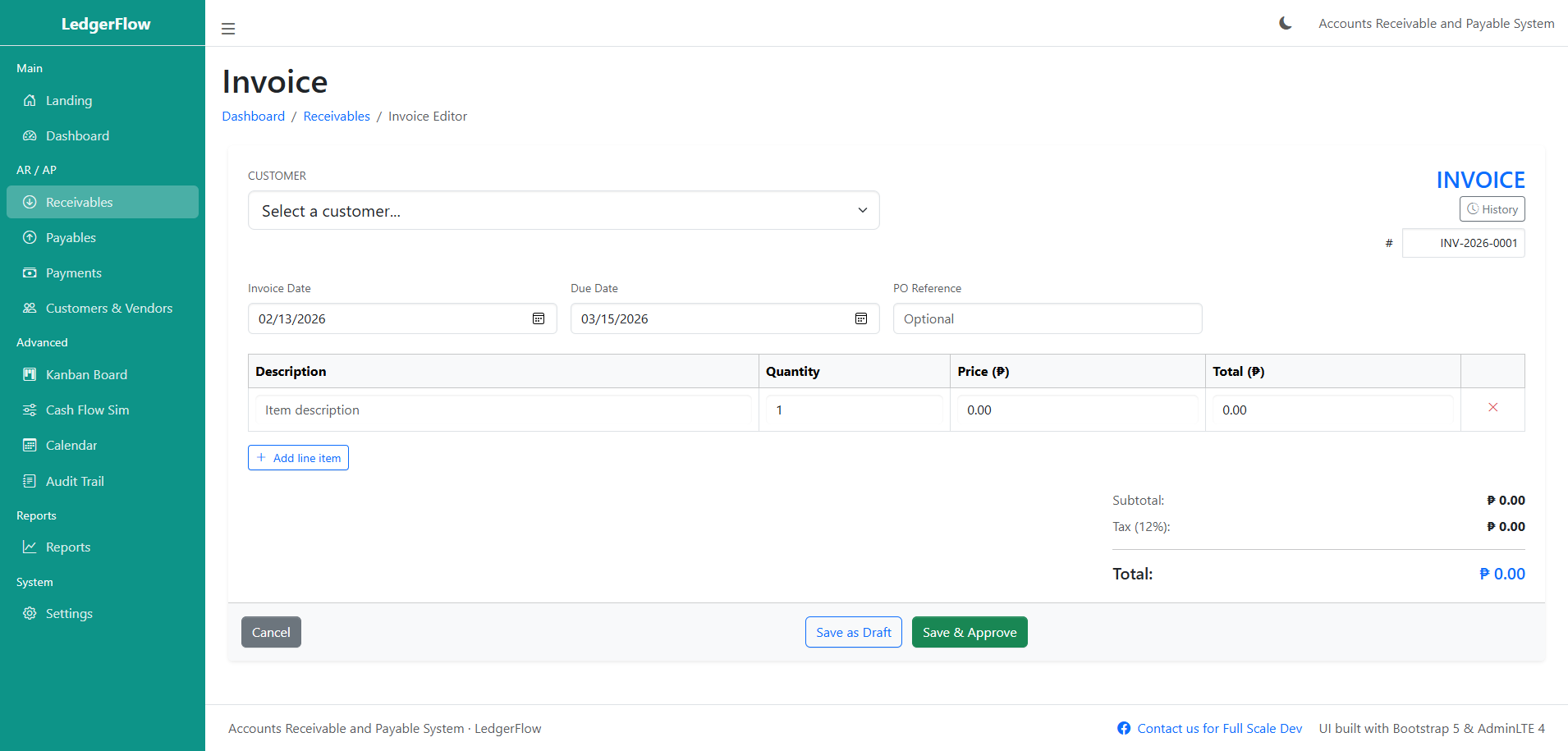
With real-time dashboards and reports, businesses can track outstanding invoices and upcoming payments.
3. Increased Efficiency
Automation reduces repetitive tasks such as invoice generation, payment reminders, and transaction logging.
4. Transparency and Accountability
A centralized platform ensures that financial data is accessible to authorized personnel, improving decision-making and accountability.
5. Scalability
As companies grow, managing finances becomes more complex. A web-based system can easily scale to handle increasing volumes of transactions.
Core Features of an Accounts Receivable and Payable System
When developing a financial management platform, several essential features must be included to ensure efficiency and usability.
1. User Authentication and Role Management
Security is a top priority for financial systems. The platform should include user authentication mechanisms such as login credentials and role-based access control.
For example:
- Administrators can manage system settings.
- Accountants can record transactions.
- Managers can view financial reports.
This structure prevents unauthorized access to sensitive financial data.
2. Invoice Management
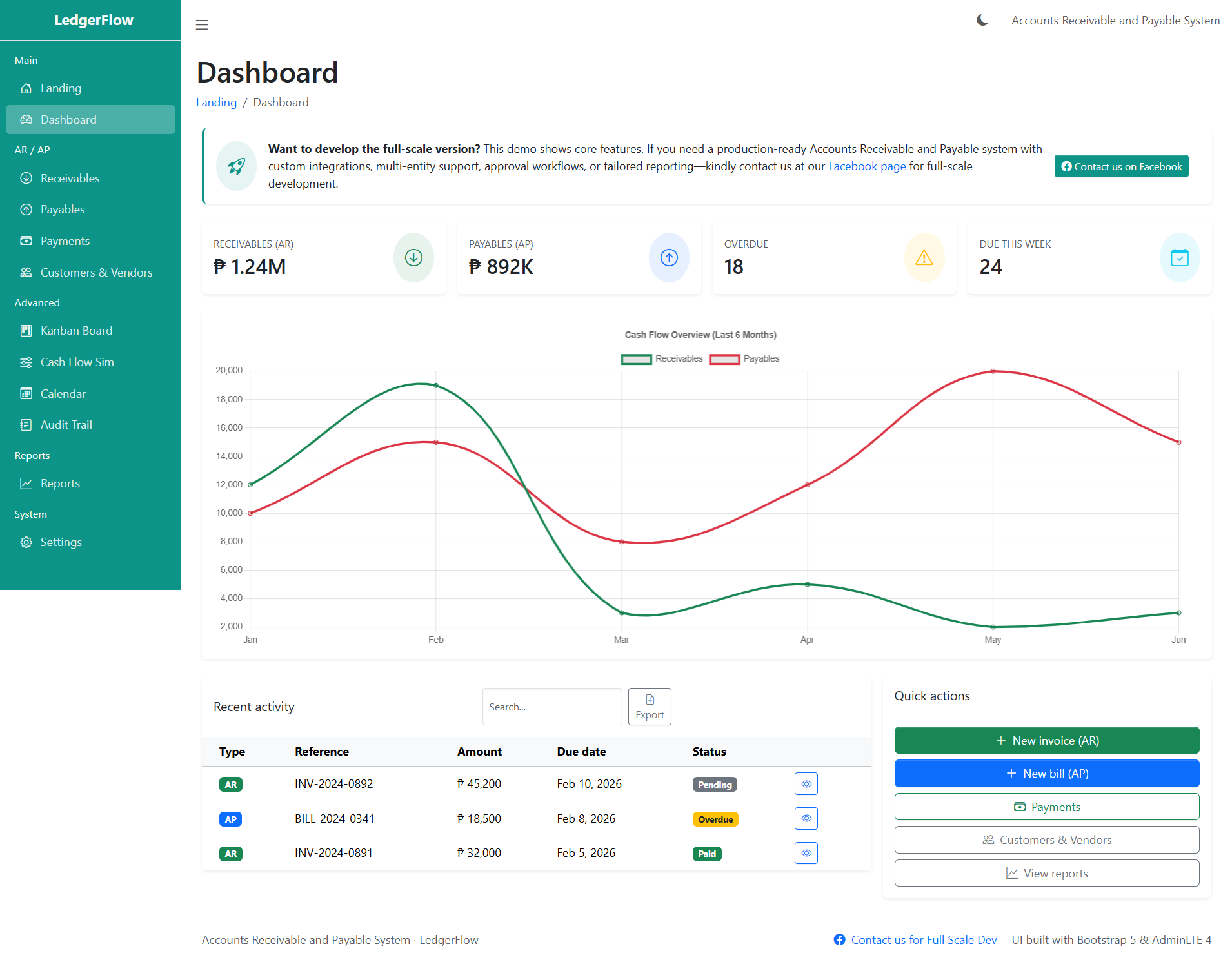
Invoices are at the heart of accounts receivable. The system should allow businesses to:
- Create digital invoices
- Track payment status
- Send automated reminders
- Record partial or full payments
Automating this process helps reduce delays in payment collection.
3. Vendor and Client Management
A good AR/AP system maintains a database of clients and suppliers. Each record typically includes:
- Contact details
- Transaction history
- Outstanding balances
- Payment schedules
Having this information organized in a single system improves communication and financial tracking.
4. Payment Tracking
Payment tracking ensures that businesses can easily monitor both incoming and outgoing transactions.
The system should support features like:
- Recording payments
- Updating balances automatically
- Linking payments to invoices
- Generating receipts
This reduces confusion and ensures accurate financial records.
5. Automated Notifications
One of the most helpful features of a modern AR/AP platform is automated notifications.
Examples include:
- Payment due reminders
- Overdue invoice alerts
- Confirmation of completed transactions
These notifications help businesses maintain healthy relationships with clients and suppliers.
6. Financial Reporting and Analytics
Financial reporting tools provide insights into a company’s financial health. A robust system should generate reports such as:
- Outstanding receivables
- Pending payables
- Cash flow summaries
- Monthly financial statements
These reports allow managers to make informed financial decisions.
7. Integration with Other Systems
An AR/AP system often works best when integrated with other business platforms, including:
- Inventory management systems
- Customer relationship management (CRM) tools
- Accounting software
- Payment gateways
Integration ensures seamless data flow across different departments.
Technology Stack for Development
Developing an online Accounts Receivable and Payable System requires selecting the right technologies. The choice of stack depends on scalability requirements, development resources, and system complexity.
Frontend Technologies
The frontend handles user interaction and interface design. Common technologies include:
- HTML, CSS, and JavaScript
- Frameworks such as React or Vue
- Responsive design tools like Bootstrap
A clean and intuitive interface is essential for financial applications.
Backend Technologies
The backend manages business logic, data processing, and communication with the database.
Popular backend frameworks include:
- Node.js with Express
- Laravel (PHP)
- Django (Python)
These frameworks help developers build secure and scalable applications.
Database Management
Financial systems rely heavily on structured data storage. Relational databases are commonly used for this purpose.
Examples include:
- MySQL
- PostgreSQL
- Microsoft SQL Server
These databases ensure reliable storage and retrieval of financial records.
Cloud Infrastructure
Modern systems often deploy applications in the cloud to improve accessibility and scalability.
Cloud platforms provide features such as:
- Data backups
- Automatic scaling
- High availability
- Security monitoring
This ensures the system remains accessible and secure.
Development Process
Building a financial platform requires careful planning and structured development. The typical process involves several stages.
1. Requirement Analysis
The development team first identifies the needs of the organization. This includes:
- Transaction volume
- Reporting requirements
- User roles
- Security standards
A clear requirement analysis ensures the system meets business objectives.
2. System Design
In this stage, developers design the architecture of the platform. This includes:
- Database schema
- Application structure
- API design
- User interface wireframes
Good design reduces development complexity later on.
3. Implementation
Once the design is finalized, developers begin coding the system.
This phase involves:
- Building backend services
- Creating frontend interfaces
- Connecting the database
- Implementing security features
Testing is often conducted alongside development.
4. Testing
Testing ensures that the system functions correctly and securely.
Common testing methods include:
- Unit testing
- Integration testing
- Security testing
- User acceptance testing
A thoroughly tested system reduces the risk of financial errors.
5. Deployment and Maintenance
After successful testing, the system is deployed to a production environment.
However, development does not end there. Continuous maintenance is necessary to:
- Fix bugs
- Update features
- Improve security
- Adapt to changing business needs
Security Considerations
Financial platforms handle sensitive information, making security a major concern.
Key security practices include:
- Data encryption
- Secure authentication
- Regular backups
- Activity logging
- Compliance with financial regulations
Implementing these measures protects both the organization and its clients.
Benefits of Implementing an AR/AP System
Organizations that adopt a digital financial management system experience several advantages.
1. Reduced Administrative Work
Automation reduces manual tasks, allowing employees to focus on more strategic activities.
2. Faster Payment Processing
Digital invoices and payment tracking accelerate transaction cycles.
3. Improved Financial Visibility
Managers gain real-time insights into company finances.
4. Stronger Vendor Relationships
Timely payments improve trust between businesses and suppliers.
5. Better Decision-Making
Accurate financial reports help executives make informed business decisions.
Future Enhancements
As technology continues to evolve, Accounts Receivable and Payable Systems can incorporate advanced features such as:
- Artificial Intelligence for financial forecasting
- Automated fraud detection
- Mobile application support
- Blockchain-based transaction verification
These innovations will further enhance financial management platforms.
Conclusion
Managing accounts receivable and payable is a fundamental responsibility for any business. While traditional methods may still work for small operations, modern organizations require more efficient and reliable solutions.
Developing an Accounts Receivable and Payable System provides businesses with a powerful tool for managing financial transactions. By automating processes, improving accuracy, and offering real-time financial insights, such a platform significantly enhances operational efficiency.
From system design and development to deployment and maintenance, creating an online AR/AP platform requires careful planning and the right technological tools. However, the long-term benefits far outweigh the initial investment.
As businesses continue to embrace digital transformation, financial management systems like these will become increasingly essential for maintaining stability, transparency, and growth.
You may visit our Facebook page for more information, inquiries, and comments. Please subscribe also to our YouTube Channel to receive free capstone projects resources and computer programming tutorials.
Hire our team to do the project.